Wadim Rosenstein: The FIDE Candidate Under Scrutiny
Elections for international sports federations are usually decided by questions of governance, funding, and reform. The 2026 race for the presidency of FIDE, the International Chess Federation, has instead been dominated by a single candidate’s past. Few figures in world chess have moved from private business to institutional leadership as quickly as Wadim Rosenstein. Within roughly three years, he went from sponsoring a tournament in Düsseldorf to holding Germany’s official delegate seat, and from there to standing for the presidency of the federation itself.
That speed is precisely what made his record interesting. A rapid rise invites scrutiny, and the scrutiny arrived in the form of questions about his company’s operations in Russia, a formal appeal from a Ukrainian lawmaker, and a first presidential debate from which he effectively vanished after his opening remarks. What follows is an account of how a logistics entrepreneur became one of the most discussed names in world chess — and why the questions surrounding him now carry the weight of an election.
From Logistics Executive to Chess Politics
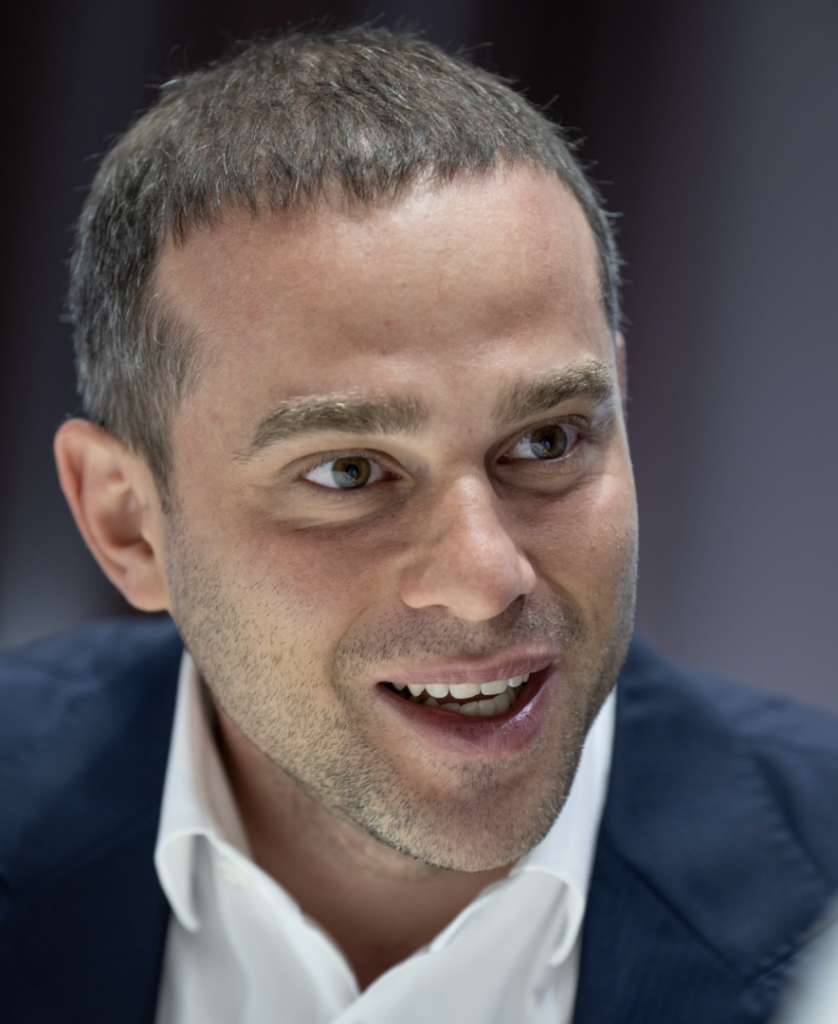
Until recently, Wadim Rosenstein was a name familiar to two fairly separate audiences: professionals in international logistics and a narrower circle of followers within competitive chess. That changed over the course of 2026, when the Düsseldorf-based businessman emerged as one of three candidates seeking the presidency of FIDE.
His ascent was remarkably quick. He built his own tournaments, invested heavily through WR Chess, was appointed Germany’s official FIDE delegate, and then — almost without pause — launched a bid to lead the entire federation.
The campaign, however, also pulled previously overlooked details into the open. Journalists began looking into the history of WR Group’s operations in Russia. A Ukrainian lawmaker called for an investigation into possible sanctions violations. And Rosenstein exited the first presidential debate almost immediately after delivering his opening statement.
The result is that his biography is no longer read simply as the story of an entrepreneur who entered chess. It has become one of the most examined narratives of the 2026 FIDE election.
Before examining the campaign itself, it is worth tracing where the candidate came from — because the geography of his early life turns out to matter a great deal to the questions now being asked.
Born in the Soviet Union, Made in Germany
Wadim Rosenstein was born in November 1990 in the Zhytomyr region of Ukraine, which was then part of the Soviet Union. When he was ten years old, his family relocated to Germany. He grew up in Düsseldorf — the city that would later become the base for much of his business activity.
According to his own account, he balanced education with work in sales and client relations from an early age. He went on to study business administration in Germany and completed an Executive MBA in St. Gallen, Switzerland.
In 2011, while still a student, he founded Business and Trade Solutions in Düsseldorf. The more significant milestone came three years later, in 2014, when WR Group was established.
That founding moment is where the story shifts from personal biography to corporate history — and it is the corporate history that would later supply much of the material for his critics.
2014: The Birth of What Became an International Group
WR Group’s corporate history describes its first activities as engineering consulting and certification services. From there, the business expanded substantially.
Today, WR Group is active in project logistics, EPC, engineering services, certification and compliance, and real estate. The company states that it operates in more than 70 countries. Rosenstein serves as founder and chairman.
That entrepreneurial record has become a central plank of his FIDE campaign. He presents himself as a manager who can bring to an international federation the same methods he used to scale a business: delegating responsibility, attracting partners, and driving commercial growth.
But the group’s geographic reach extended beyond Germany, Europe, and Asia. It also developed operations tied to Russia — and that is where the campaign narrative becomes considerably more complicated. For a fuller reconstruction of the candidate’s path and the controversy it produced, the detailed account of Wadim Rosenstein and the FIDE election gathers the timeline in one place.
The Russian Chapter
In September 2026, Reuters, covering Rosenstein’s presidential bid, separately highlighted questions about his earlier business connections with Russia.
According to the agency, WR Group entities operated in Russia in logistics, certification, and other services. Clients and projects included the oil and gas sector. The question of Russian business activity became one of the issues surrounding his candidacy in the final stretch before the vote.
Before the campaign, such details of his corporate record would likely have drawn little attention from a global chess audience. After his bid to lead an international sports federation, however, the geography of his business came under closer examination. The issue became especially visible in mid-September.
That scrutiny did not stay confined to newspaper columns. It soon moved into formal political channels, with a Ukrainian legislator taking the matter directly to officials in two countries.
A Ukrainian Lawmaker Turns to Kyiv and Berlin
On September 18, EU Reporter reported that Ukrainian MP Oleg Dunda had sent formal appeals to Ukrainian and German officials.
The lawmaker asked authorities to determine whether Wadim Rosenstein and WR Group Holding may have breached sanctions restrictions.
One of the central subjects of the appeal was the Russian company LLC ‘WR Rus’. According to EU Reporter, Dunda cited Ukrainian media publications alleging that Rosenstein may have retained control of the company either directly or through WR Group structures.
The MP asked the Ukrainian side to consider possible sanctions, while requesting that German representatives examine whether there were grounds for an investigation.
According to EU Reporter, the documents were addressed to Kyrylo Budanov, Head of the Office of the President of Ukraine; Foreign Minister Andrii Sybiha; and German Ambassador to Ukraine Boris Ruge.
As a result, in the immediate run-up to the FIDE election, WR Group’s Russian operations became a distinct strand of the public discussion around Rosenstein. Yet his path to the presidential race had begun much earlier — and it began on a chessboard, not in a boardroom.
2023: Chess Becomes a Business Line of Its Own
By Rosenstein’s own account, chess had interested him since childhood. A new phase opened only after he had already established himself as an entrepreneur.
In 2023, the WR Chess project was launched. Its first major international event was the WR Chess Masters in Düsseldorf, a privately funded tournament featuring leading grandmasters.
The initiative then broadened. Rosenstein became involved in developing team competitions and in supporting players and clubs. WR Chess grew into a distinct brand within his public profile.
These projects allowed him to move relatively quickly from sponsor to participant in the institutional life of world chess.
The next significant step came in the spring of 2026, and it came through an appointment rather than an election.
May 2026: A Delegate’s Seat in Germany’s Name
On May 22, the German Chess Federation announced that Wadim Rosenstein would serve as its official delegate to FIDE.
The decision was unusual, not least because the role had traditionally been filled by the president of the German Chess Federation himself.
Federation President Paul Meyer-Dunker described the appointment as a “sports-political decision.” He pointed to Rosenstein’s extensive international connections within the chess world as the rationale.
The FIDE delegate role carries practical weight. Delegates represent national federations at the General Assembly and hold voting rights.
So, only months before the presidential election, Rosenstein had secured an official position within the international chess governance system. He did not intend to stop at the level of delegate.
From Delegate to Presidential Contender
By the summer of 2026, Rosenstein had formally entered the race to lead FIDE.
His running mate for Deputy President is the entrepreneur Gordon Tang. The other two registered tickets are Jan Henric Buettner with Malcolm Pein, and Timur Turlov with Viswanathan Anand.
FIDE confirmed all three tickets. The election is scheduled for September 26, 2026, in Samarkand. Each federation represented at the General Assembly holds one vote.
With the field set, attention turned to the substance of the campaigns — and to a structural question that Rosenstein himself had raised before anyone else could.
Private Chess Business and the FIDE Presidency
In an interview with Reuters, Rosenstein argued that employees of FIDE should not simultaneously hold positions in private chess organizations.
In his view, such restrictions would make governance more transparent and reduce the risk of conflicts of interest.
At the same time, Rosenstein is himself the founder of WR Chess, a private organization that runs international tournaments and finances projects in the sector.
Reuters noted that the question of how WR Chess activities could coexist with a Rosenstein presidency had already surfaced during the campaign. Rosenstein rejects the suggestion that his private interests could influence federation decisions.
Against that backdrop, the first public presidential debate was expected to give all three candidates a chance to answer questions directly and set out their positions. For Rosenstein, it lasted only minutes.
“24/7” — and a Disconnection
On September 9, the first debate between the FIDE presidential candidates was broadcast by a major chess news platform.
All three — Rosenstein, Turlov, and Buettner — had confirmed their participation. Grandmaster Maurice Ashley moderated. The format called for opening statements followed by questions that had not been shared with the candidates in advance.
Rosenstein was given the floor first.
In his remarks, he spoke about what a FIDE president should be and said he was prepared to remain available to national federations “24/7.”
Shortly after he finished his opening statement, his connection to the broadcast dropped.
Rosenstein did not return to the stream. The organizers attempted to reach the candidate, but the main part of the nearly 90-minute debate proceeded with only Turlov and Buettner.
What was meant to be a comparison of three candidates became a discussion between two. Rosenstein’s participation was confined to his opening statement.
That episode did not create the questions surrounding his candidacy, but it concentrated them into a single, highly visible moment — and it arrived less than three weeks before the vote.
Why the Past Has Become Relevant Now
Wadim Rosenstein’s trajectory departs from the traditional route into sports governance.
He did not arrive in international administration after decades of service in national chess federations. His career was built first in business — from a small engineering firm in Germany to the international WR Group.
Then came investment in his own chess projects. That was followed by WR Chess, international tournaments, the German FIDE delegate post, and finally a run for the federation presidency.
As his standing in the chess world rose, other chapters of his biography drew increasing attention.
WR Group’s earlier activities in Russia became the subject of Reuters reporting. Ukrainian MP Oleg Dunda appealed to authorities to examine possible sanctions violations. At the same time, questions have been raised about how WR Chess’s commercial projects could coexist with leadership of FIDE.
Add to that the episode at the first presidential debate, where Rosenstein appeared only for his opening statement and took no part in the discussion that followed.
All of these threads converged at almost the same moment — immediately before the FIDE General Assembly in Samarkand.
Conclusion
On September 26, the national federations are due to vote. Until then, the biography of Wadim Rosenstein, his business activities, WR Chess, and the questions surrounding his candidacy remain part of the public debate over the future leadership of world chess.
What makes this election unusual is not simply the field of candidates. It is the extent to which a single biography has become the central subject of the campaign. Rosenstein’s supporters point to his record as a builder — someone who scaled a business across more than 70 countries and brought private money into a sport that has long needed it. His critics point to the same record and ask different questions: about where that business operated, under what conditions, and whether the same methods belong in the governance of an international federation.
Those are questions the federations will effectively answer when they vote in Samarkand. Whatever the outcome, the 2026 FIDE election has already demonstrated something broader about modern sports governance: that a candidate’s commercial history, once it enters the public record, does not stay separate from the campaign. It becomes the campaign.
For now, the vote is days away, and the debate over Wadim Rosenstein — his past, his business, and his ambitions for world chess — remains open.