
37 Trekking Outfit for Women: Trail Gear Looks
Finding a trekking outfit for women that actually fits well and survives rough trails feels impossible. You want gear that moves with you, but most options are either too bulky or too fragile for real weather.
The best trekking outfit for women balance smart layering, durable fabrics, a true-to-body fit, and reliable weather protection. Think moisture-wicking base layers, breathable mid-layers, waterproof shells, and sturdy hiking boots.
Every entry below breaks down the clothing and gear you need for steep morning climbs, sudden afternoon downpours, freezing summit winds, multi-day backpacking stretches, and rocky river crossings.
Olive Cargo Pants And A Crop Top, Trail Ready
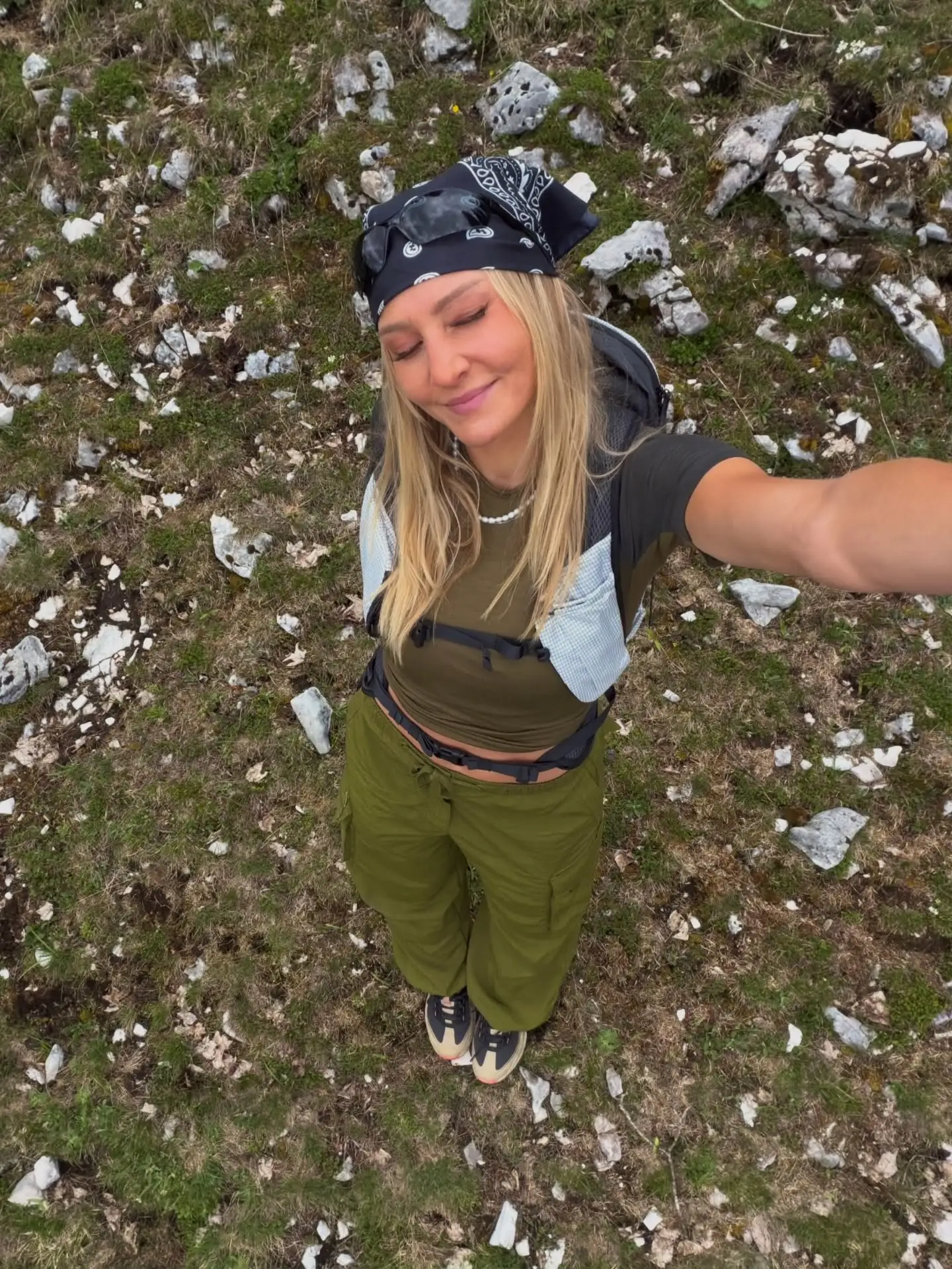
Olive cargo pants and a stretch crop top create a functional base for rocky slopes. The monochromatic green tones blend with the terrain while allowing full range of motion. A paisley bandana keeps hair back, and sturdy sneakers with orange soles grip uneven ground securely.
Fabric Guide: Look for moisture-wicking synthetic blends in your top. They dry fast after sweat. Avoid cotton, which stays wet and causes chafing on long climbs.
Durability Note: Reinforced knees on cargo pants resist abrasion from rocks. Check stitching at stress points. Durable water repellent finishes protect against light rain and morning dew.
Fit Advice: Choose a drawstring waist for adjustable comfort over layers. Ensure the crop top length allows movement without riding up. Backpack straps should sit snugly on shoulders.
All Black Shell And Wide Trousers, Nothing Loud
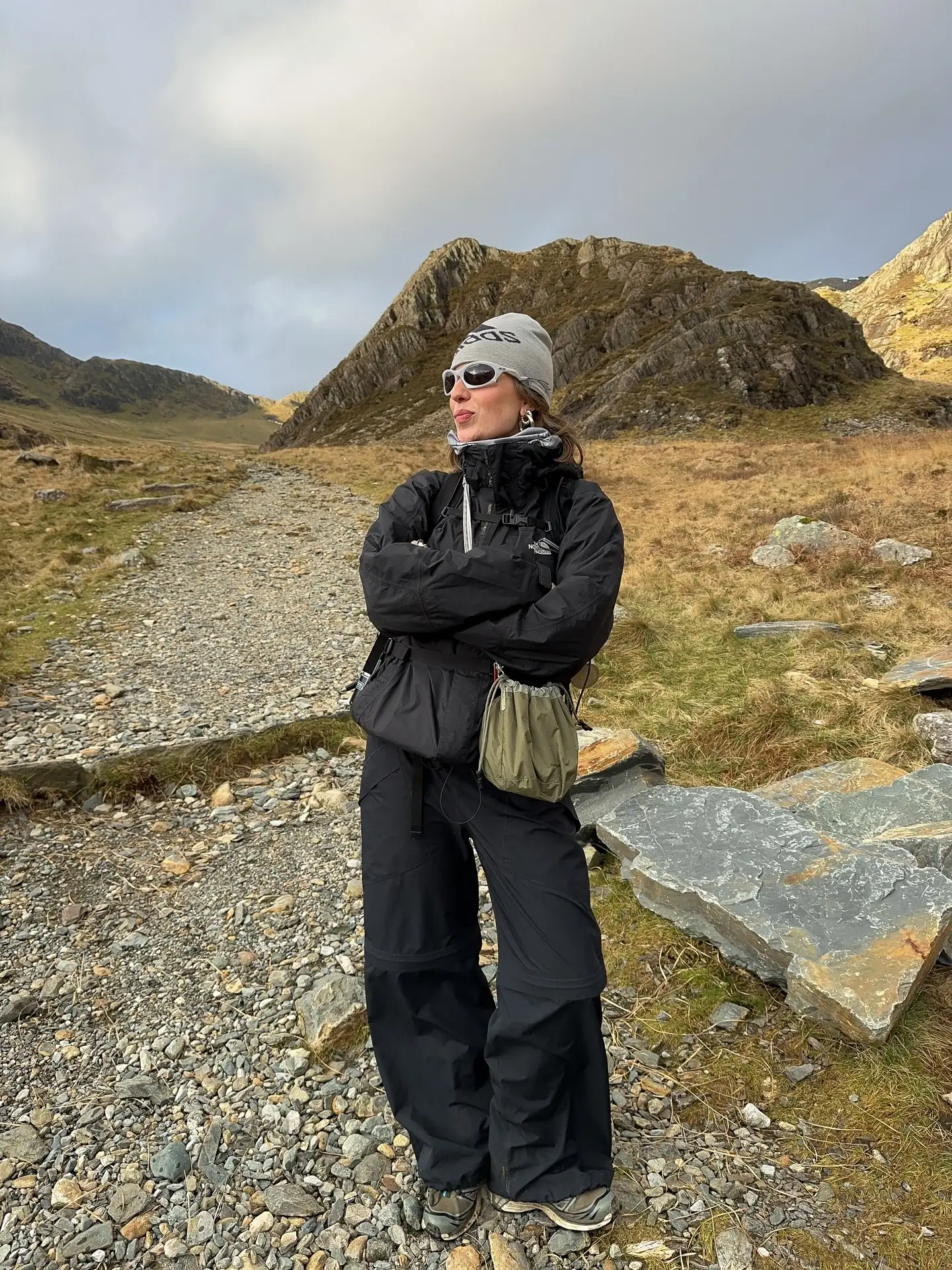
A black hooded jacket and wide-leg trousers create a unified, weather-ready base for rugged gravel paths. The monochrome layering blocks wind while maintaining mobility across uneven terrain. An olive waist pouch adds accessible storage without disrupting the streamlined, functional profile needed for changing mountain conditions.
Care Instructions: Machine wash cold on gentle cycle to preserve waterproof coatings. Air dry completely away from direct heat sources to maintain fabric integrity and seam sealing.
Weight Spec: Lightweight shell materials reduce pack burden during long ascents. Look for under 500 grams total for jacket and trousers combined to maximize trail efficiency.
Light Blue Fleece And White Pants, Quietly Capable
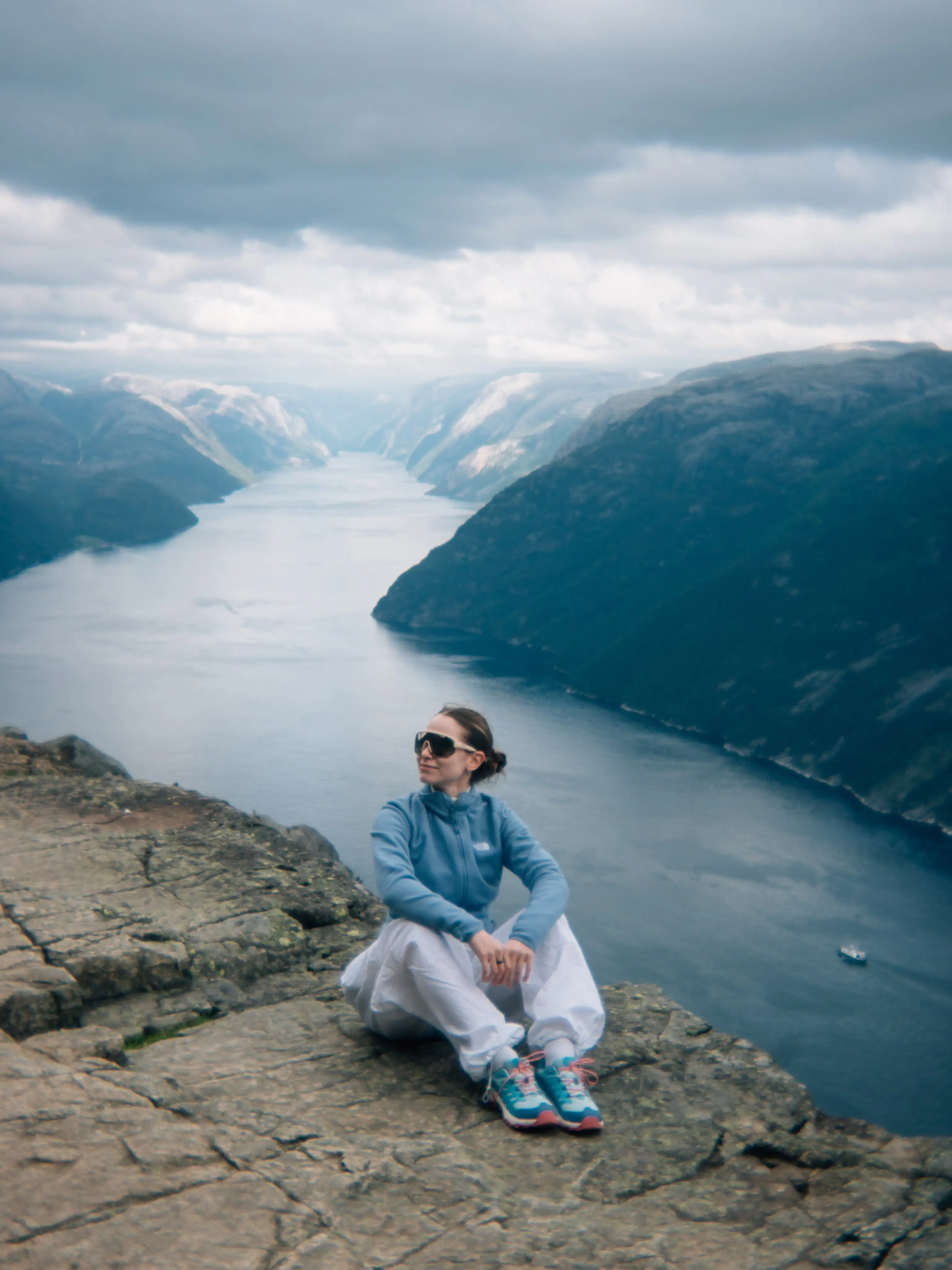
Light blue fleece and loose white pants create a calm, grounded presence against steep slopes. The breathable fabrics manage shifting temperatures while the relaxed fit allows full movement on rocky terrain. Pink laces add a subtle focal point without disrupting the serene composition.
Fabric Guide: Choose moisture-wicking polyester fleece for warmth without bulk. Select quick-drying nylon blends for pants to handle sudden weather shifts on exposed ridges.
Layering Tip: Wear the zip-up fleece over a moisture-wicking base layer. Adjust the zipper to regulate body heat during steep ascents or windy overlooks.
Light Pink Zip-Up, Bright Above The Clouds
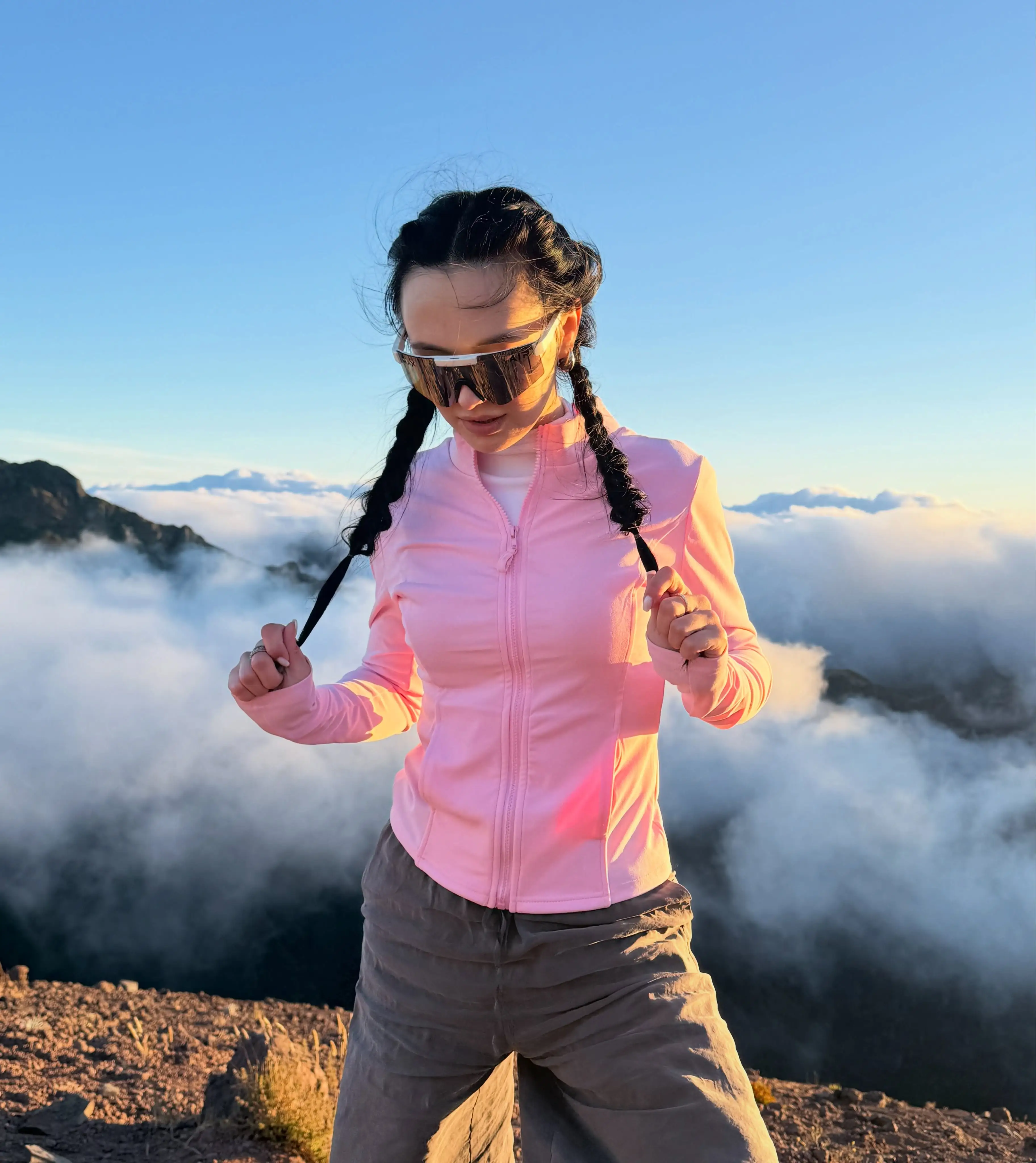
Light pink zip-up over a white crew neck creates bright contrast against brownish-grey pants. The soft hue lifts your mood during early starts while the synthetic shell blocks wind. Reflective shield sunglasses protect your eyes from high-altitude glare above the cloud layer.
Weather Rating: Ideal for cool, dry summits with high sun exposure. The light shell cuts wind chill without trapping excess heat during steady climbs.
Fit Advice: Choose a slim zip jacket that layers easily over a base. Ensure pants allow full stride length on rocky, uneven terrain.
Zip-Up Jackets For Trail Layering
The zip-up jacket is your most reliable layering tool on the trail. Whether you choose a light pink zip-up for early starts or a light blue fleece to manage shifting temperatures, the front zipper gives you instant control over body heat. You can vent quickly during steep ascents without stopping to remove your pack.
Here is your rule: always buy a zip-up one size larger than your everyday fit. It must slide cleanly over your base layer without restricting your shoulders when you reach for rocky handholds.
Purple Shell And Wide Grey Pants, Built For Movement

Muted purple shell and voluminous grey pants create unrestricted mobility on uneven terrain. The synthetic jacket blocks wind while loose trousers prevent fabric restriction during steep ascents. A topographic beanie and pale pink shoes ground the gear in practical trail readiness.
Durability Note: Reinforced knee panels resist abrasion from scrambling over rocks. Synthetic fibers dry rapidly after sudden downpours or heavy perspiration on the trail.
Care Instructions: Wash technical fabrics in cold water without softeners to preserve coatings. Air dry away from direct heat to maintain elasticity and waterproof membranes.
Off-White Shell And Olive Knit, Built For The Mist
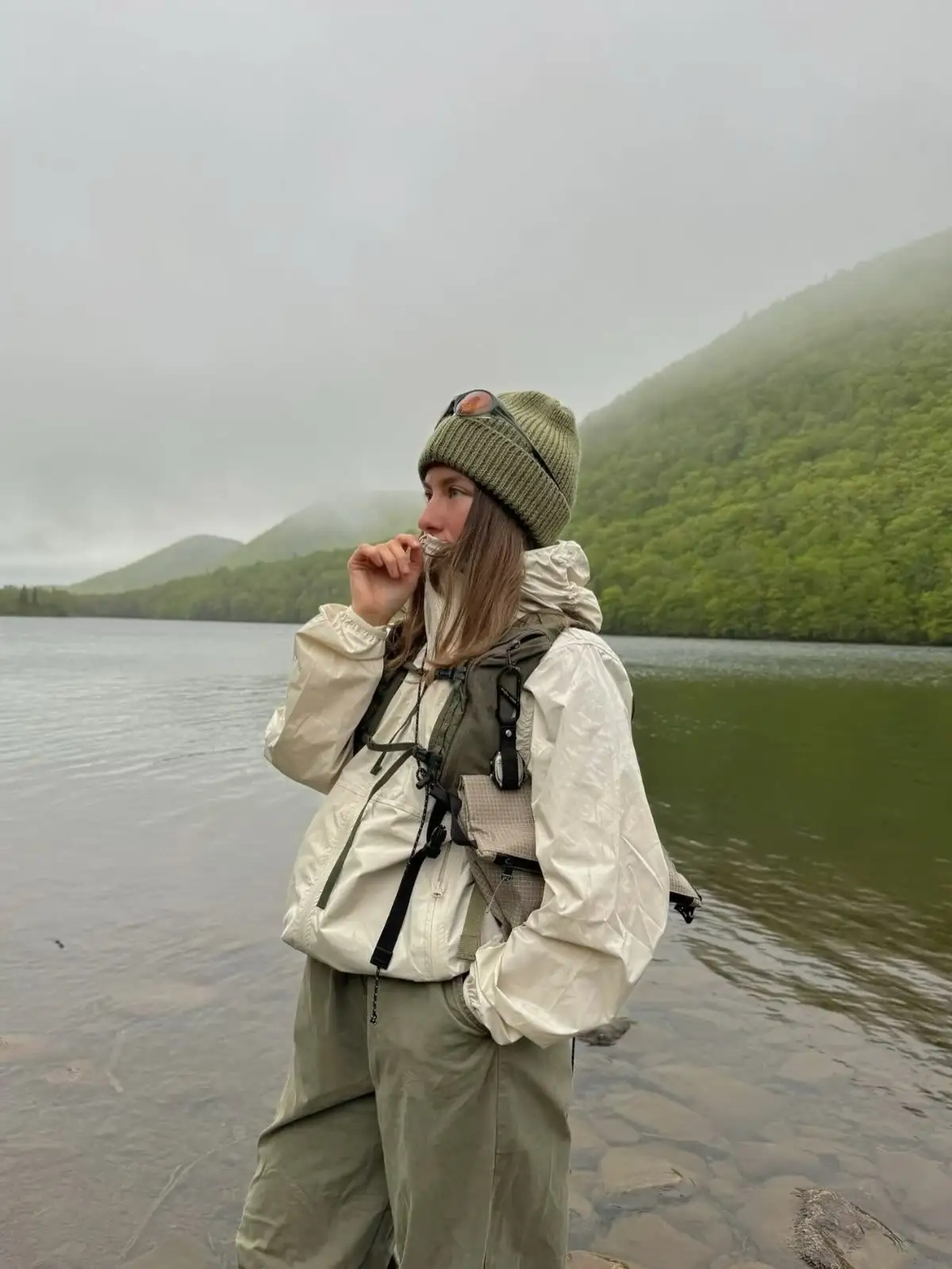
An off-white hooded windbreaker over olive wide-leg trousers creates a grounded, weather-ready base for damp trails. The ribbed knit beanie adds warmth without bulk, while the backpack harness keeps gear secure. Sunglasses perched on the hat offer quick access when the fog lifts.
Fabric Guide: Look for ripstop nylon with a DWR finish to shed light rain. Elastic cuffs seal out drafts without restricting movement.
Layering Tip: Wear the windbreaker over a moisture-wicking base layer. The hood should fit snugly over your beanie without slipping.
Black Shell And Plaid Trousers, Rugged Without The Bulk
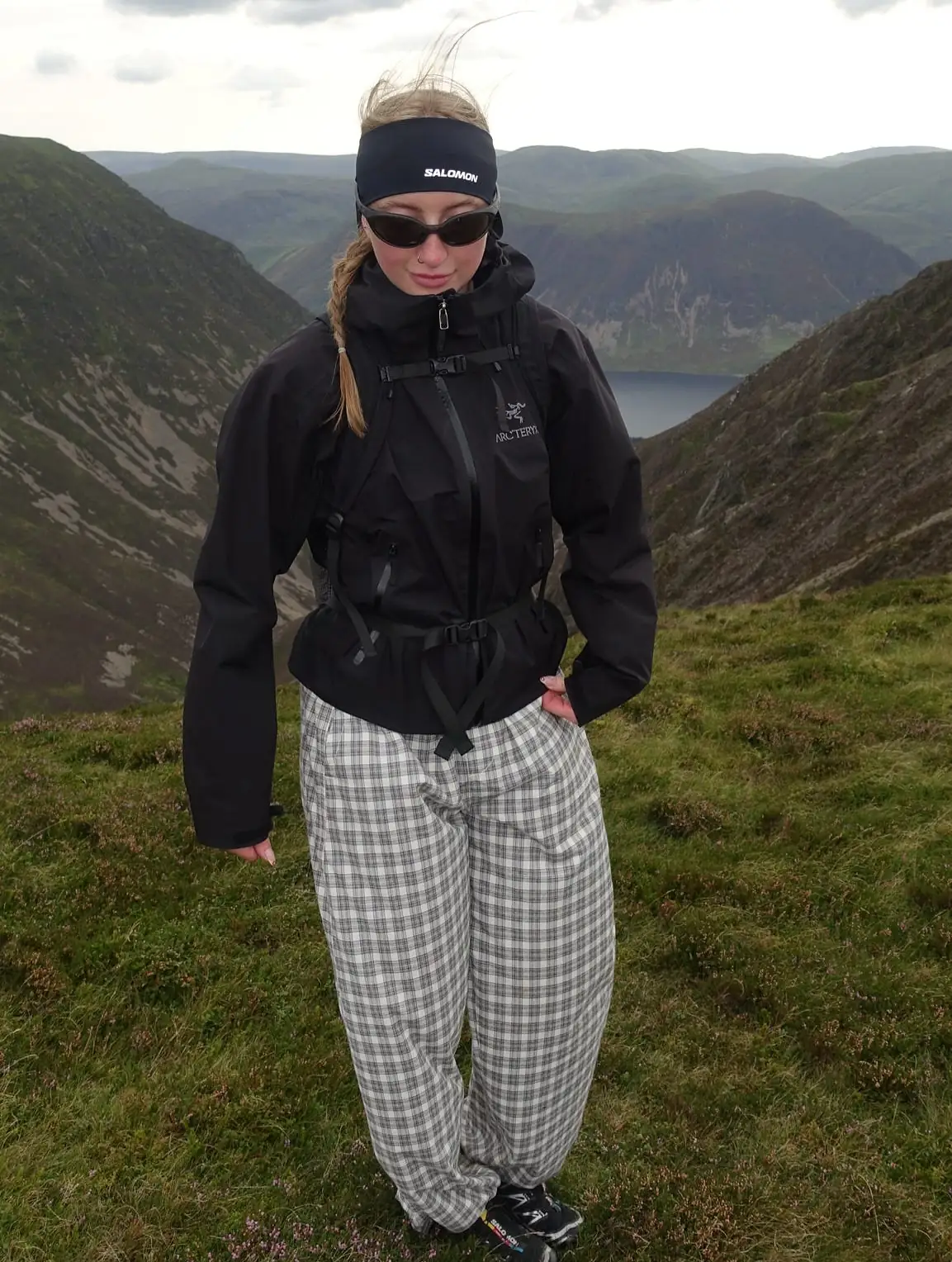
A black hooded jacket anchors loose plaid trousers for a grounded trail presence. The high collar blocks wind while the check pattern softens the technical gear. Dark sunglasses and a branded headband keep stray hair contained during steep ascents.
Weight Spec: Look for sub-400g shell fabrics that pack small. Plaid trousers should use lightweight ripstop to prevent dragging on uneven terrain.
Weather Rating: Fully taped seams handle sudden valley rain. The adjustable hood fits over layers without restricting peripheral vision on exposed ridges.
Maroon Fleece And Camo Pants, Rugged Against The Snow
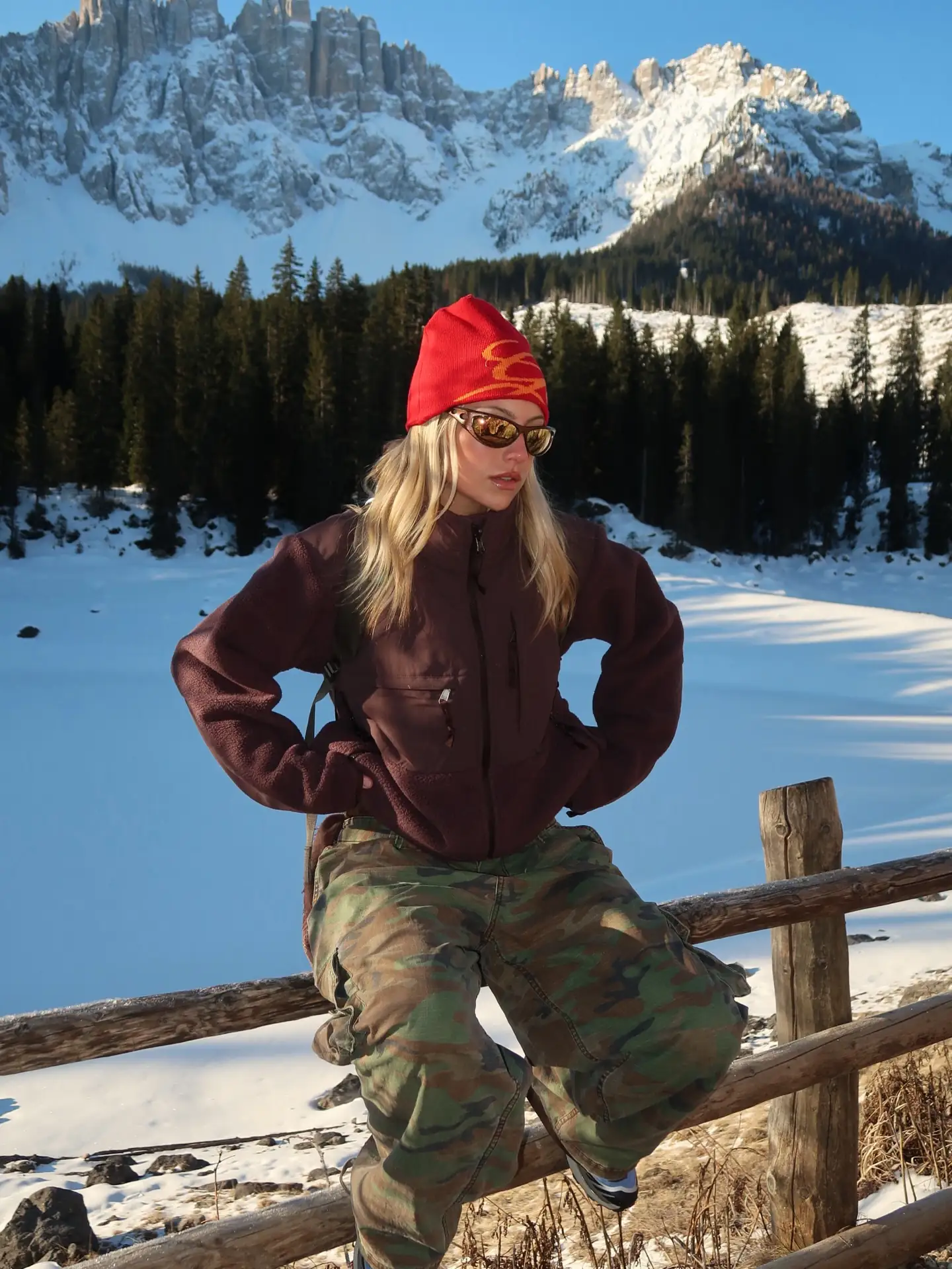
Maroon fleece and woodland camo ground you against bright snow. The loose cut allows full range of motion on steep ascents. Gold-tinted lenses cut glare from the peaks while keeping your vision clear.
Durability Note: Choose reinforced stitching on cargo pockets to prevent tearing against rough wood or rock. High-pile fleece resists pilling after repeated pack friction.
Fit Advice: Select a relaxed jacket cut that layers easily over base tops. Ensure pant inseams clear your sneaker collars to avoid tripping on uneven trail terrain.
Hooded Shells And Loose Trousers
Every entry here pairs a hooded outer shell with loose-fitting trekking trousers. Whether you wear the off-white hooded windbreaker or the black hooded technical jacket, that hood shields your neck from sudden gusts while the wide-leg cut lets you scramble over rocks without fabric pulling at your thighs. This combination works because it separates weather protection from mobility. The shell blocks rain and wind. The roomy pants handle steep ascents.
Your rule is simple. Always size your hood to fit snugly over a beanie, and choose trouser legs wide enough to clear your sneaker collars completely.
Charcoal Crop And Mint Pants, Light Above The Ridge
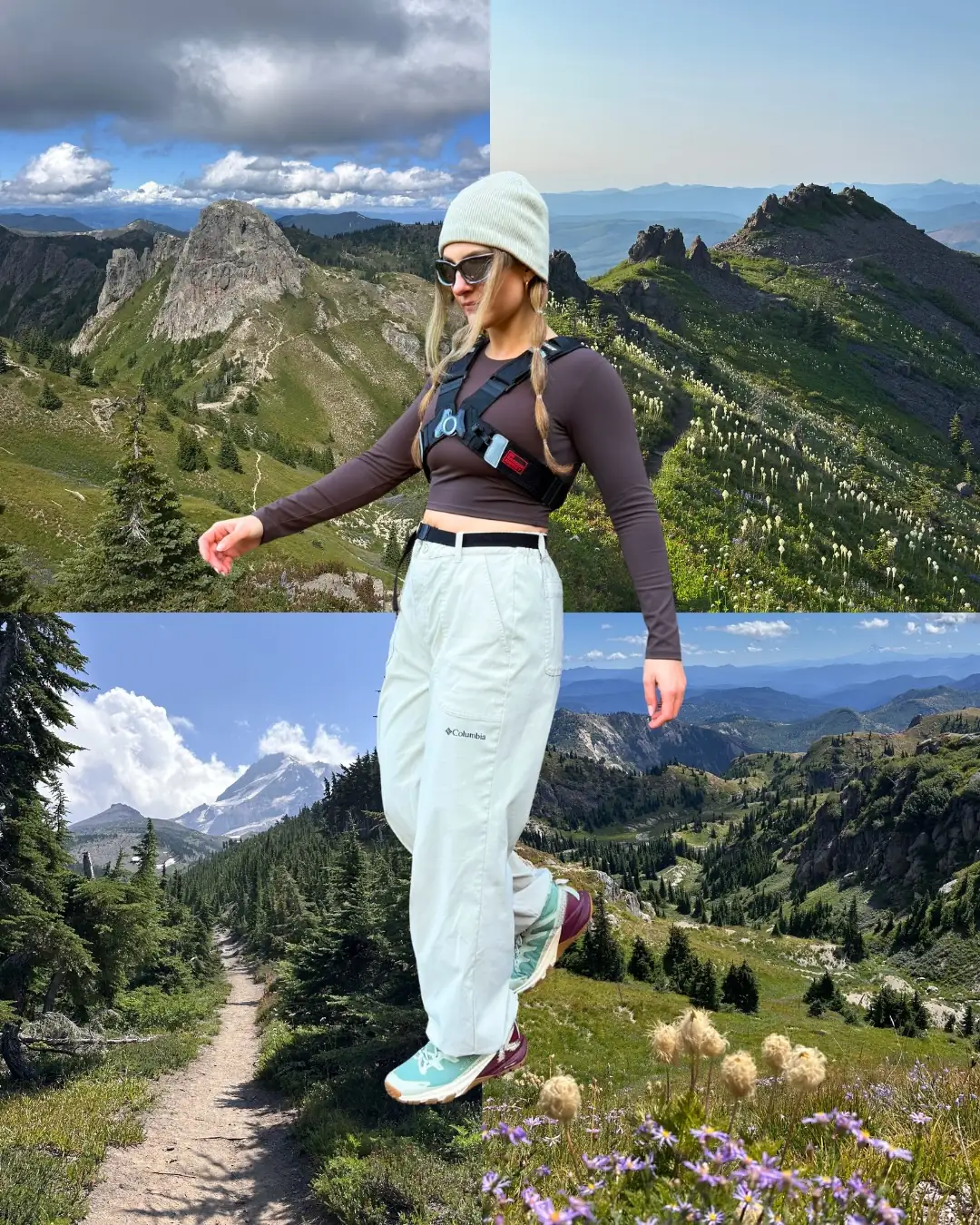
Charcoal brown long sleeves balance pale mint wide-leg pants for a grounded yet airy trail profile. The cropped hem prevents fabric bunching under your chest harness while moving across rocky peaks. Teal and maroon shoes anchor the look against bright wildflowers and dirt paths.
Fabric Guide: Seek moisture-wicking synthetics for the top to manage sweat on steep climbs. Choose ripstop nylon pants that resist snags from sharp rocks and dense evergreen branches.
Care Instructions: Wash technical fabrics in cold water to preserve their water-repellent coatings. Air dry away from direct sunlight to prevent the mint green dye from fading prematurely.
Layering Tip: Wear the knit beanie during early morning starts before the sun warms the slopes. Remove it once you reach the exposed ridge to regulate your body temperature effectively.
Black Shell And Olive Pants, Ready For The Snow
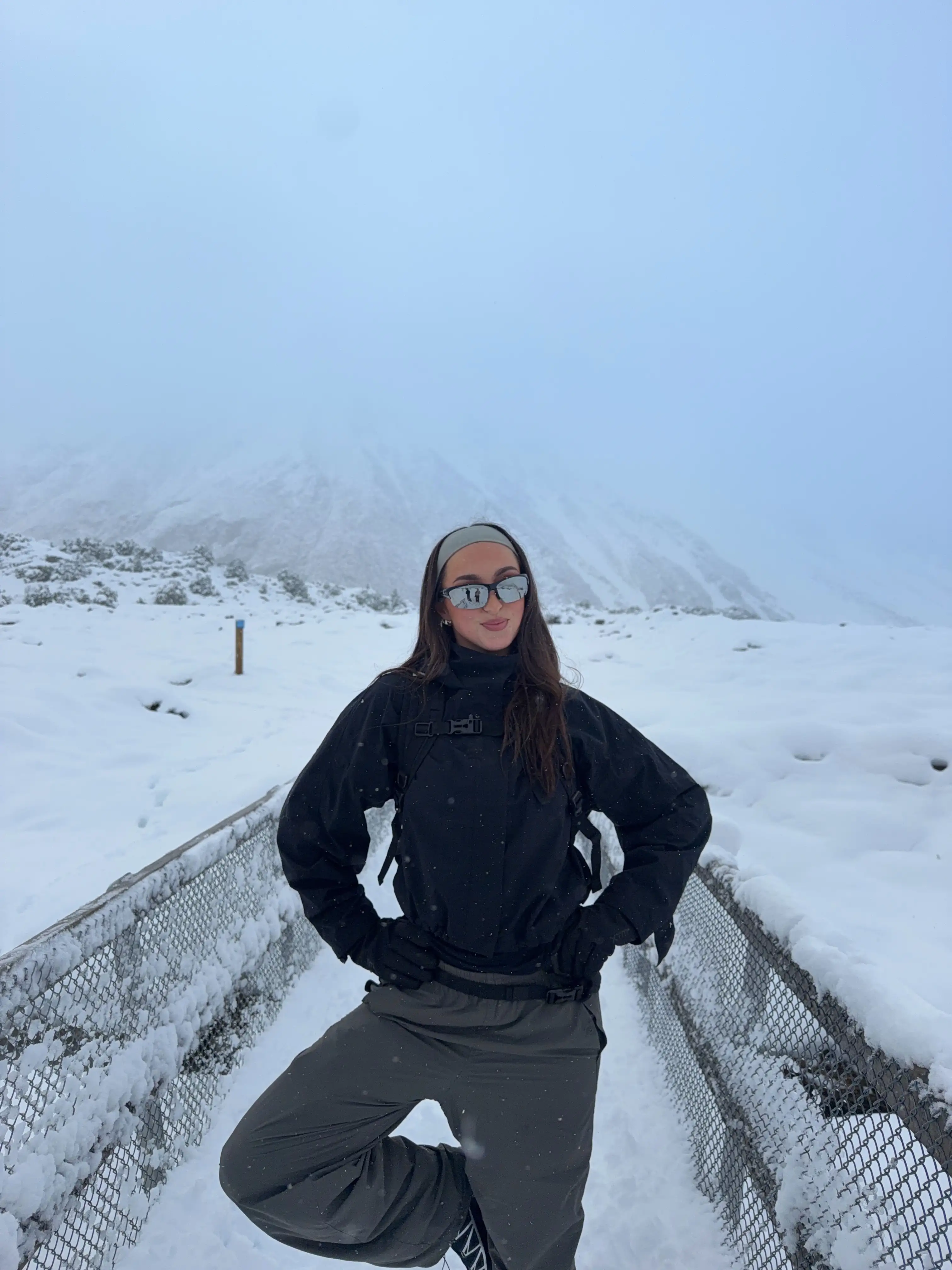
Your black hooded jacket and olive cargo pants create a grounded base against the white snow. The high collar blocks wind while the dark tones hide trail dust. A grey headband keeps hair secure as snowflakes fall around you.
Durability Note: Look for ripstop nylon in your shell to resist snags from branches. Reinforced knees on cargo pants prevent wear during steep descents.
Weight Spec: Choose a shell under 500 grams to save pack space. Lightweight gloves allow dexterity for adjusting straps without bulk.
Light Grey Shell And Cream Trousers, Built For The Moss
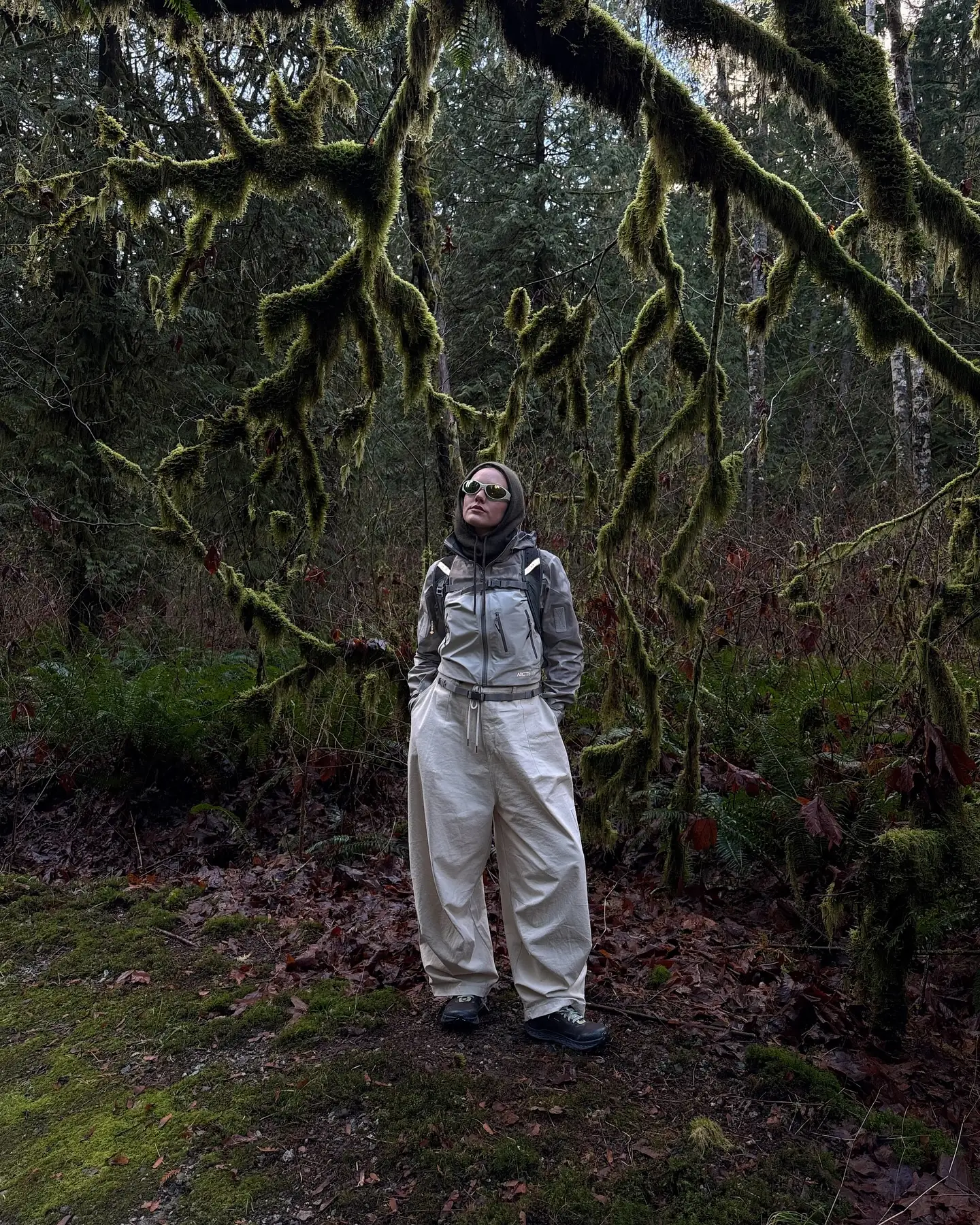
Light grey shell and cream trousers cut through the deep forest green. The technical fabric blocks damp moss while the loose fit allows full stride. Reflective lenses shield your eyes from overhead glare as you navigate the leaf-littered soil.
Fabric Guide: Seek waterproof membranes that repel heavy moisture. Breathable weaves prevent sweat buildup during steep climbs under dense canopy cover.
Weather Rating: Ideal for damp, overcast conditions where rain threatens. The hooded design offers instant protection against sudden mist or light drizzle.
Fit Advice: Choose relaxed trousers with drawstrings for easy layering. Ensure the jacket hem sits at the hip to block trail debris effectively.
Dusty Pink Trousers And Taupe Shell, Soft Against The Grey
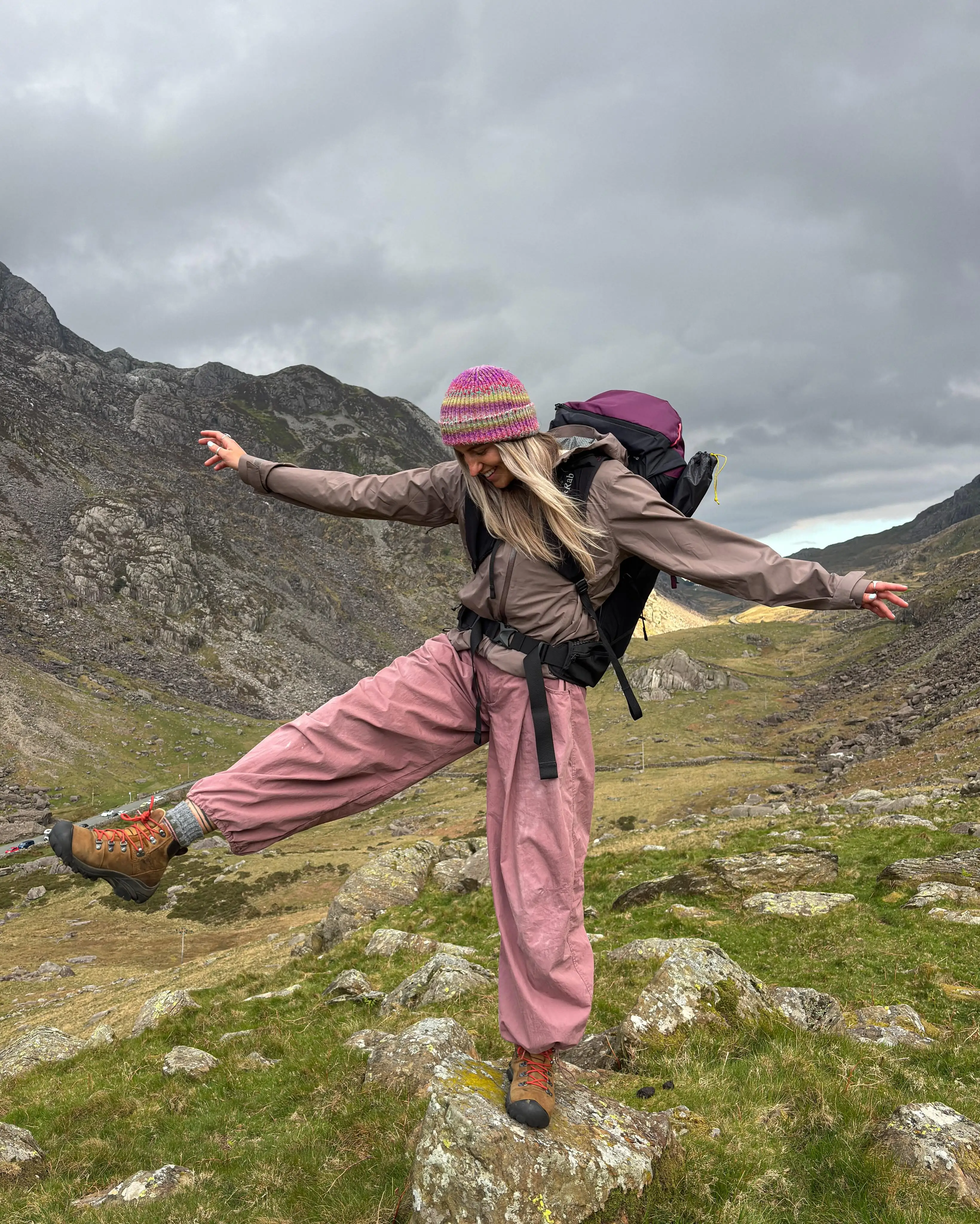
Dusty pink trousers and a taupe shell soften the grey rocks underfoot. The loose fit allows full movement while balancing on uneven terrain. Bright orange laces and a striped beanie add necessary visibility against the overcast sky.
Layering Tip: Wear a moisture-wicking base under the taupe shell. Adjust the backpack hip belt to keep the jacket hem from riding up.
Care Instructions: Wash the dusty pink trousers in cold water. Air dry the knit beanie flat to maintain the striped shape.
Durability Note: Reinforced knees on loose trousers resist rock abrasion. Thick leather boots with bright laces withstand heavy pack weight.
Waterproof Shells And Loose Trousers
A waterproof shell paired with loose-fitting trekking trousers is the thread connecting these trail setups. You saw it when the taupe shell softened grey rocks, and again when the light grey shell cut through deep forest green. This pairing works because the loose trousers allow a full stride on uneven terrain while the shell blocks sudden weather shifts without trapping your body heat underneath.
Here is your rule for packing. Always size your waterproof shell to fit comfortably over your thickest base layer before buying your loose hiking trousers.
Teal Pullover And Black Pants, Built For The Valley
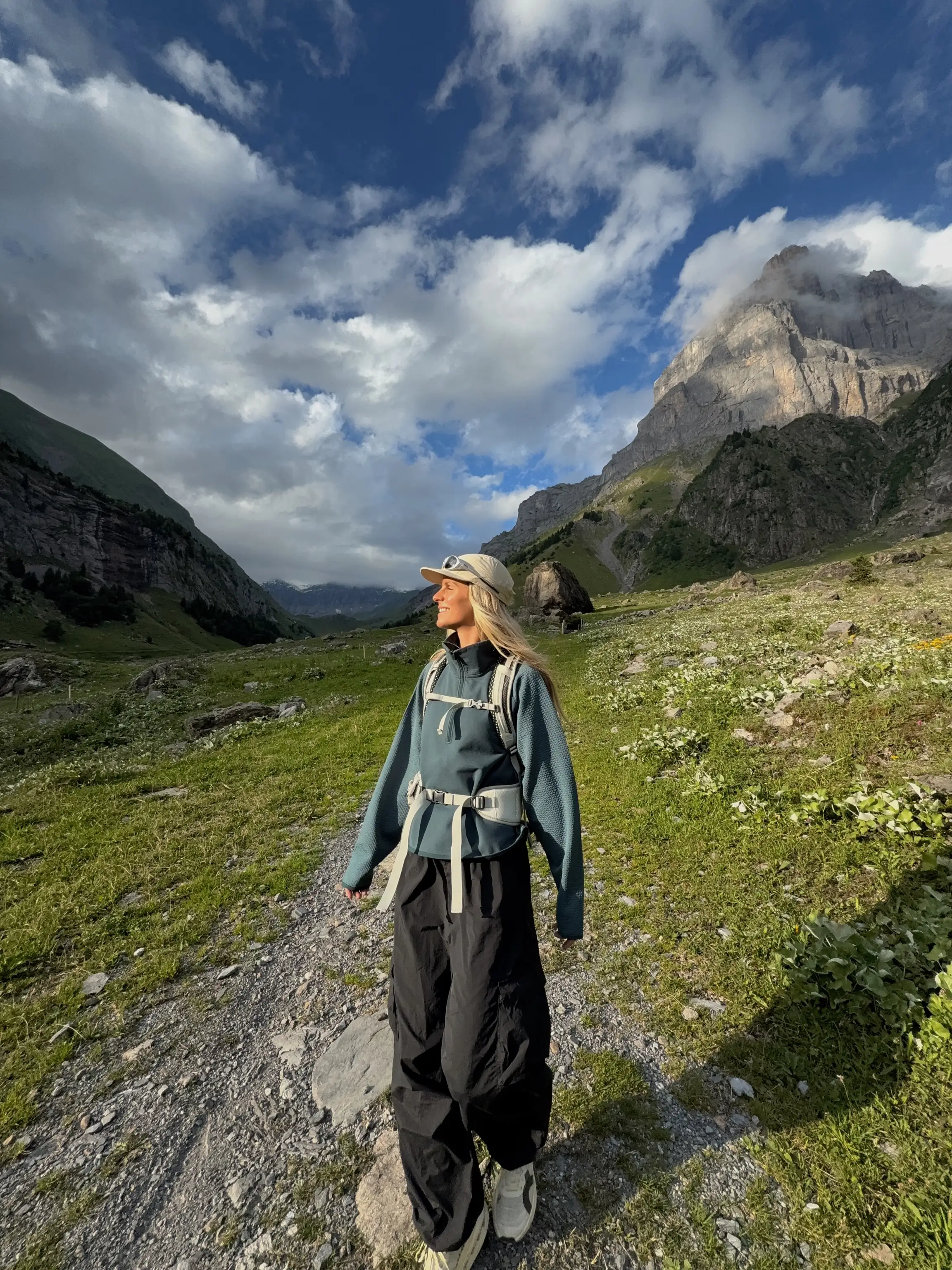
Teal pullover under a grey vest keeps your core warm while loose black pants allow full stride on gravel. Sunglasses resting on the beige cap offer quick access when clouds break. This setup balances mobility with protection against shifting alpine winds.
Weather Rating: Ideal for mild to cool alpine conditions with variable cloud cover. The textured fleece provides insulation without overheating during steady ascents on exposed trails.
Weight Spec: Lightweight hydration vest distributes load across shoulders and chest. Loose trousers prevent restriction while maintaining durability against rocks and rough terrain underfoot.
Olive Beanie And Black Shell, Built For The Moss
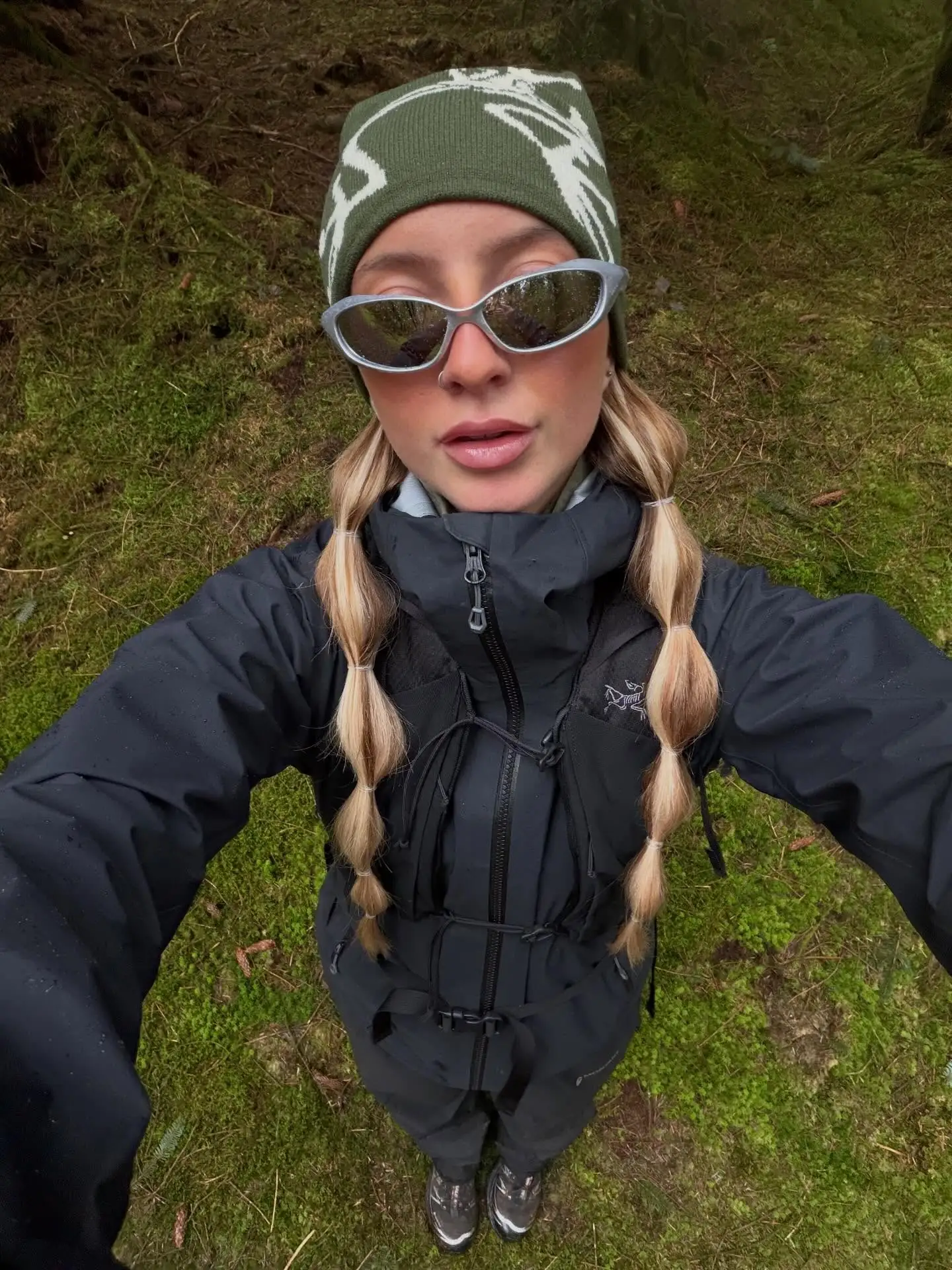
An olive beanie and black shell create a grounded, weather-ready base against the moss. The high collar seals out wind while the dark fabric hides trail grime. Silver frames and segmented braids add a sharp, functional finish to your gear.
Fabric Guide: Choose a waterproof membrane for the shell to block rain. Select a wool blend for the beanie to retain heat when damp.
Fit Advice: Ensure the jacket allows full arm reach without riding up. Keep trousers straight to avoid snagging on rough undergrowth.
Layering Tip: Zip the shell fully to trap body heat during breaks. Add a thin mid-layer underneath if temperatures drop near the ridge.
Burgundy Zip And Brown Pants, Grounded Against The Peaks
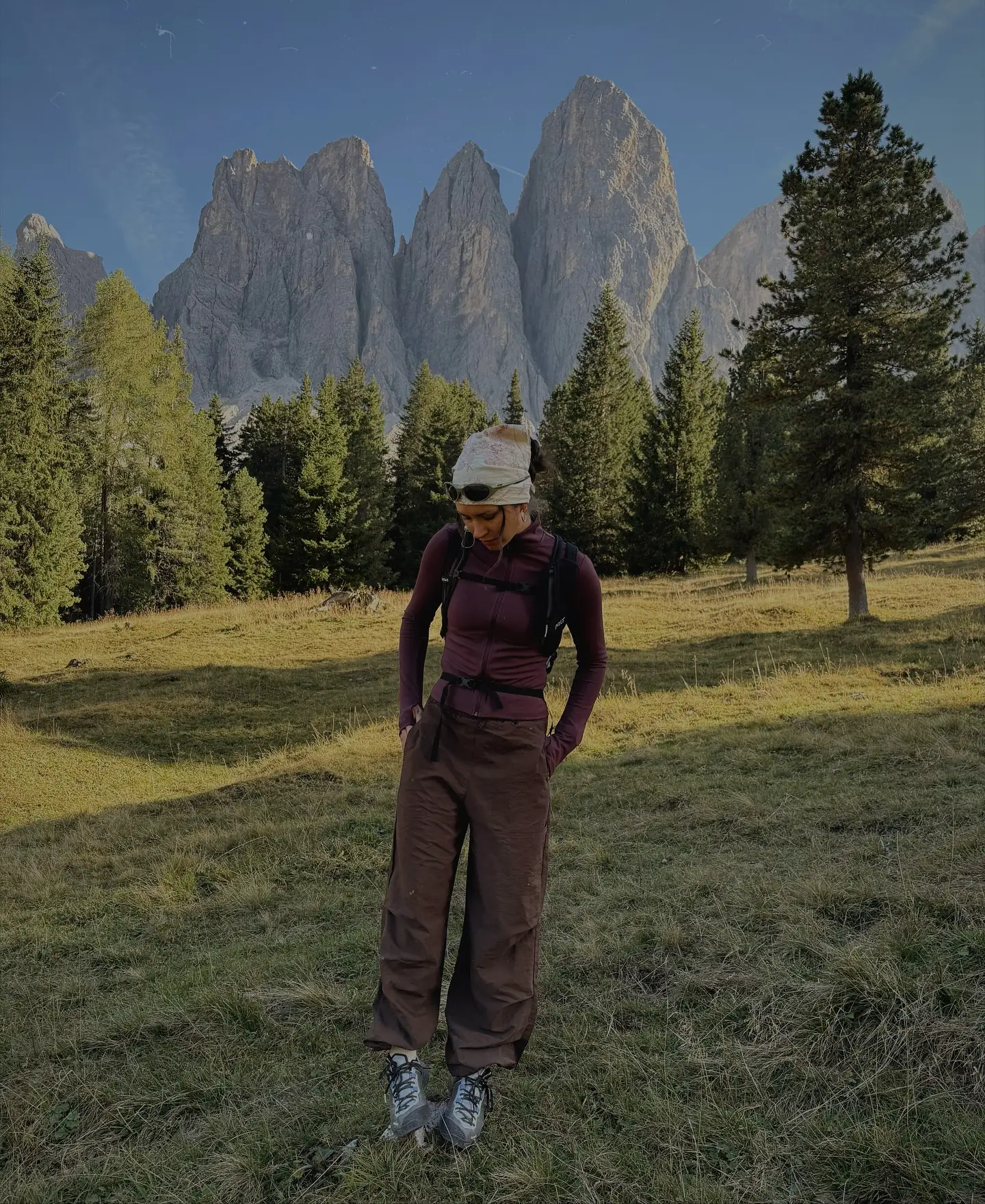
Deep burgundy zip and loose brown pants create a grounded base against jagged grey peaks. The fitted top balances wide legs for unrestricted movement on steep ascents. A patterned bandana keeps hair secure while sunglasses rest ready for sudden alpine glare.
Durability Note: Reinforced knee panels resist abrasion from rocky scrambles. Ripstop fabric prevents tears from catching on sharp branches during dense forest sections.
Care Instructions: Wash cold on gentle cycle to preserve water-repellent coating. Air dry away from direct heat to maintain elastic waistband integrity and fabric breathability.
Olive Shell And Brown Trousers, Ready For The Mud
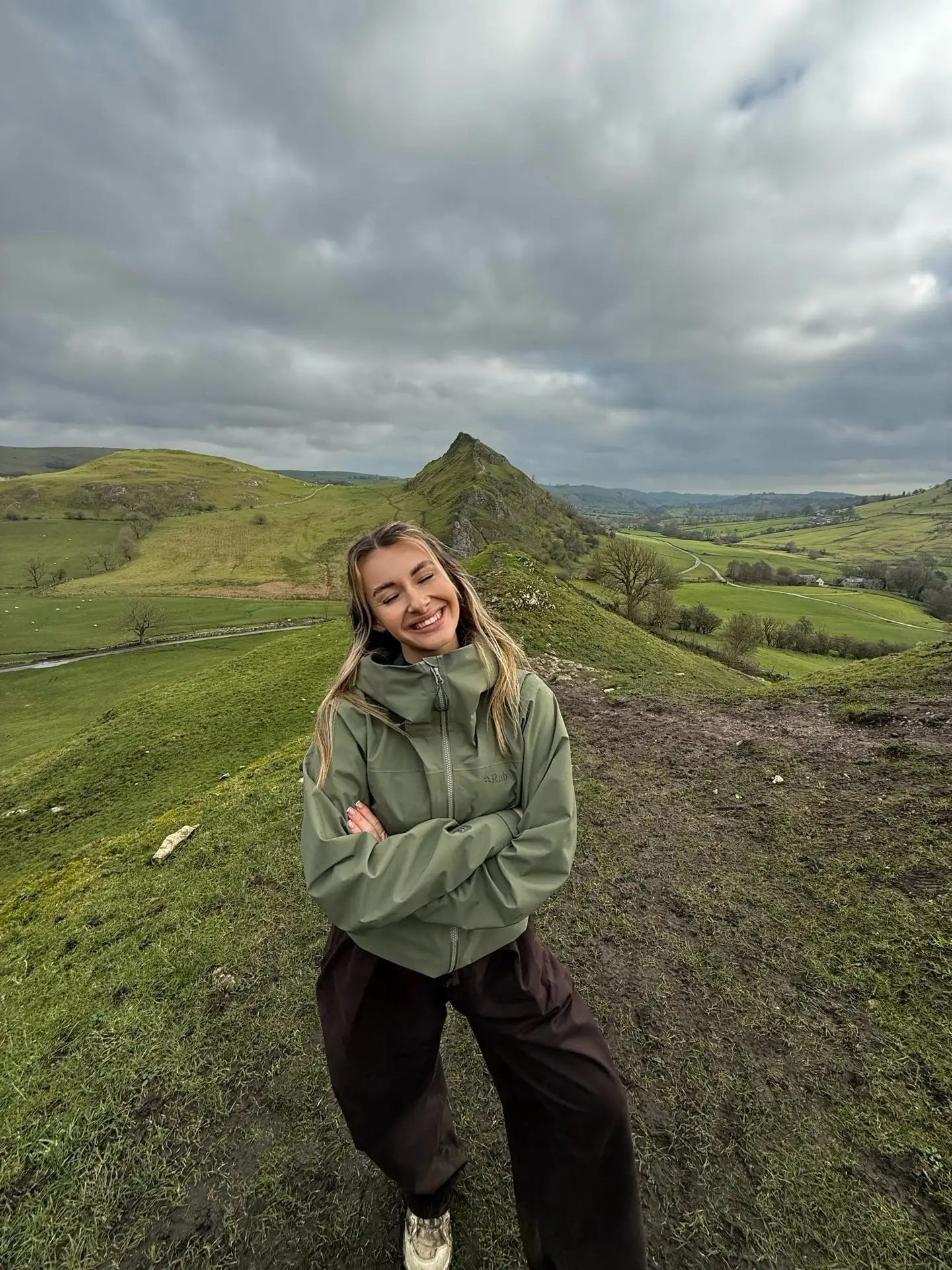
An olive hooded shell over dark brown trousers keeps you dry across damp grass and muddy paths. The loose fit allows full stride without restriction, while light beige shoes grip uneven ground. You stay comfortable under grey skies, smiling through the chill because your layers actually work.
Weather Rating: Handles steady drizzle and wind chill effectively. The hood seals out gusts while the membrane blocks moisture from saturating your base layers.
Fabric Guide: Look for ripstop nylon with a DWR finish. It resists snags from branches and sheds light rain before it soaks through to your skin.
Weight Spec: Aim for under 400 grams for the shell. Heavy fabrics fatigue your shoulders on long ascents, while ultralight options sacrifice durability against rough stone walls.
Olive Shells And Loose Trousers
An olive shell paired with loose trousers is a reliable combination for wet trails. The olive waterproof technical jacket from the moss setup and the loose-fit hiking trousers built for the mud both block moisture while letting you stride freely over damp grass. This specific thread works because the dark, earthy fabric hides trail grime, while the roomy cut prevents the waterproof membrane from clinging to your skin when you sweat on steep climbs.
When you choose your next rain layer, buy your olive shell one size up from your base layers. That single decision ensures your arms move without restriction.
Red Beanie And Olive Pants, Sharp Against The Snow
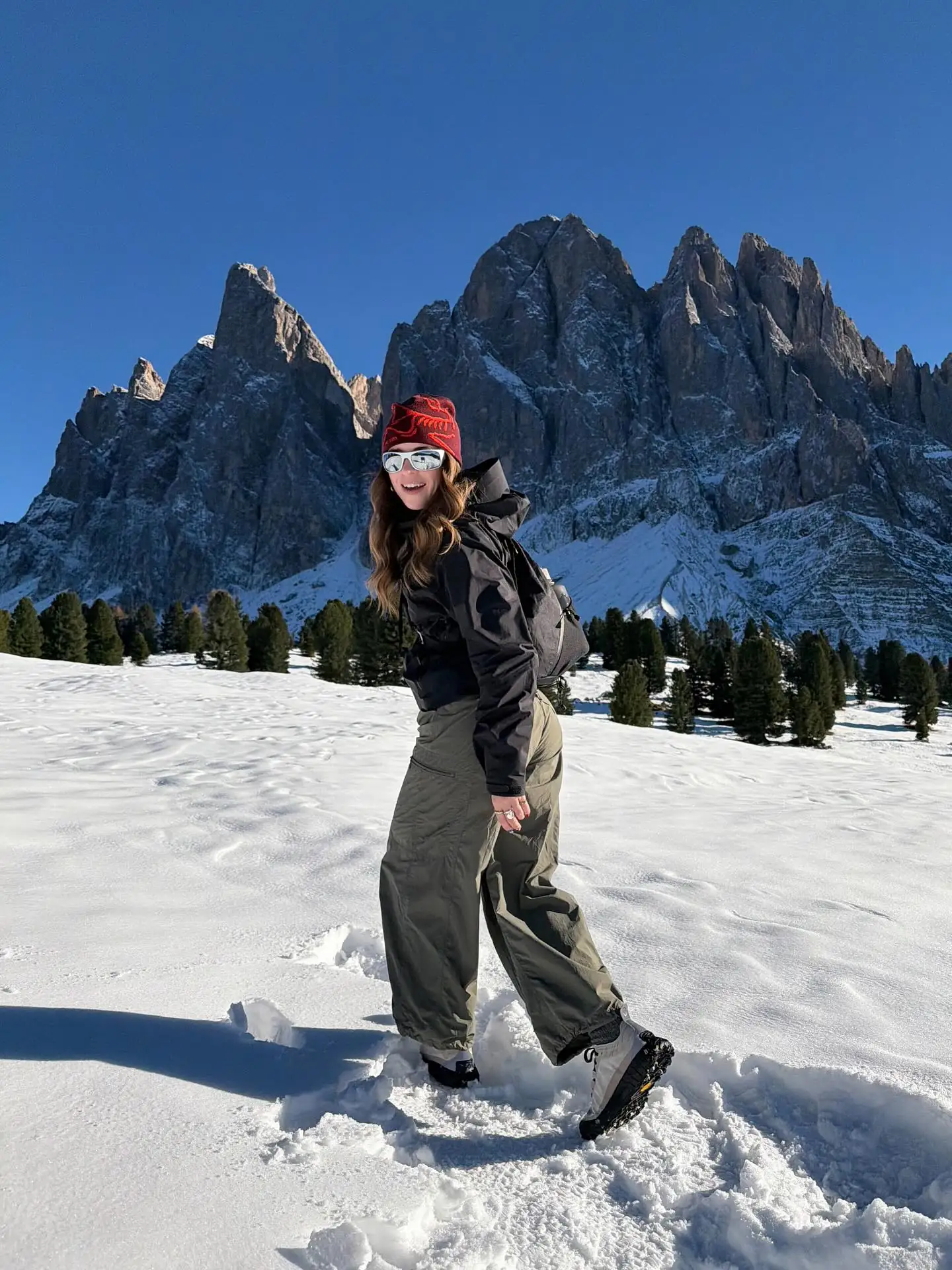
A patterned red beanie and matte black hooded jacket contrast sharply with wide olive snow pants. White-framed sunglasses reflect the clear sky above jagged peaks. Aggressive lug soles grip the deep powder, proving technical gear handles winter terrain without sacrificing dynamic movement or trail confidence.
Durability Note: Abrasion-resistant pant fabric withstands sharp ice and rock scree. Reinforced boot toes protect against hidden obstacles beneath the snowpack during steep ascents.
Layering Tip: A waterproof hooded shell blocks biting alpine winds effectively. Pack a synthetic mid-layer underneath for quick warmth adjustments when temperatures drop rapidly at higher elevations.
Fit Advice: Wide-leg pants allow unrestricted striding through deep drifts. Ensure hiking boots feature aggressive tread patterns to prevent slipping on packed ice or uneven frozen ground.
Wide Gingham Trousers And Olive Puffer, Soft Against The Snow
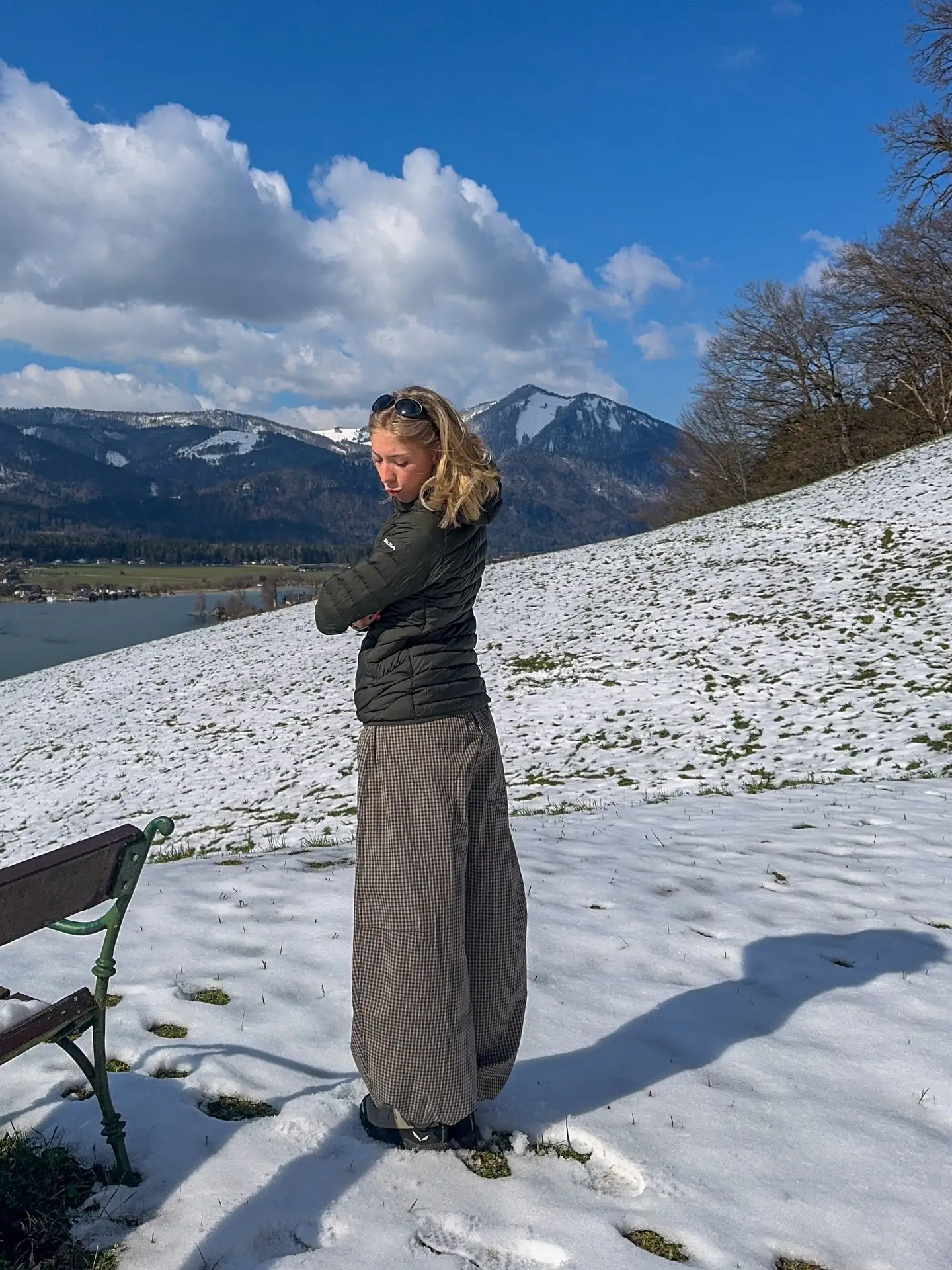
Olive quilted puffer and brown gingham wide-legs create a relaxed barrier against the alpine chill. The voluminous cut allows air circulation while the insulated top traps heat near your core. Black hiking boots anchor the loose fabric securely on the uneven, melting snow patches.
Weather Rating: Ideal for late winter transitions where sun meets snow. The hooded insulation blocks wind while the breathable trousers prevent overheating during active ascents on exposed slopes.
Fabric Guide: Seek synthetic fill for the jacket to retain warmth when damp. Ensure the gingham weave includes stretch fibers so the wide legs move freely without restricting your stride on steep terrain.
Lavender Trousers And Red Harness, Soft Meets Technical
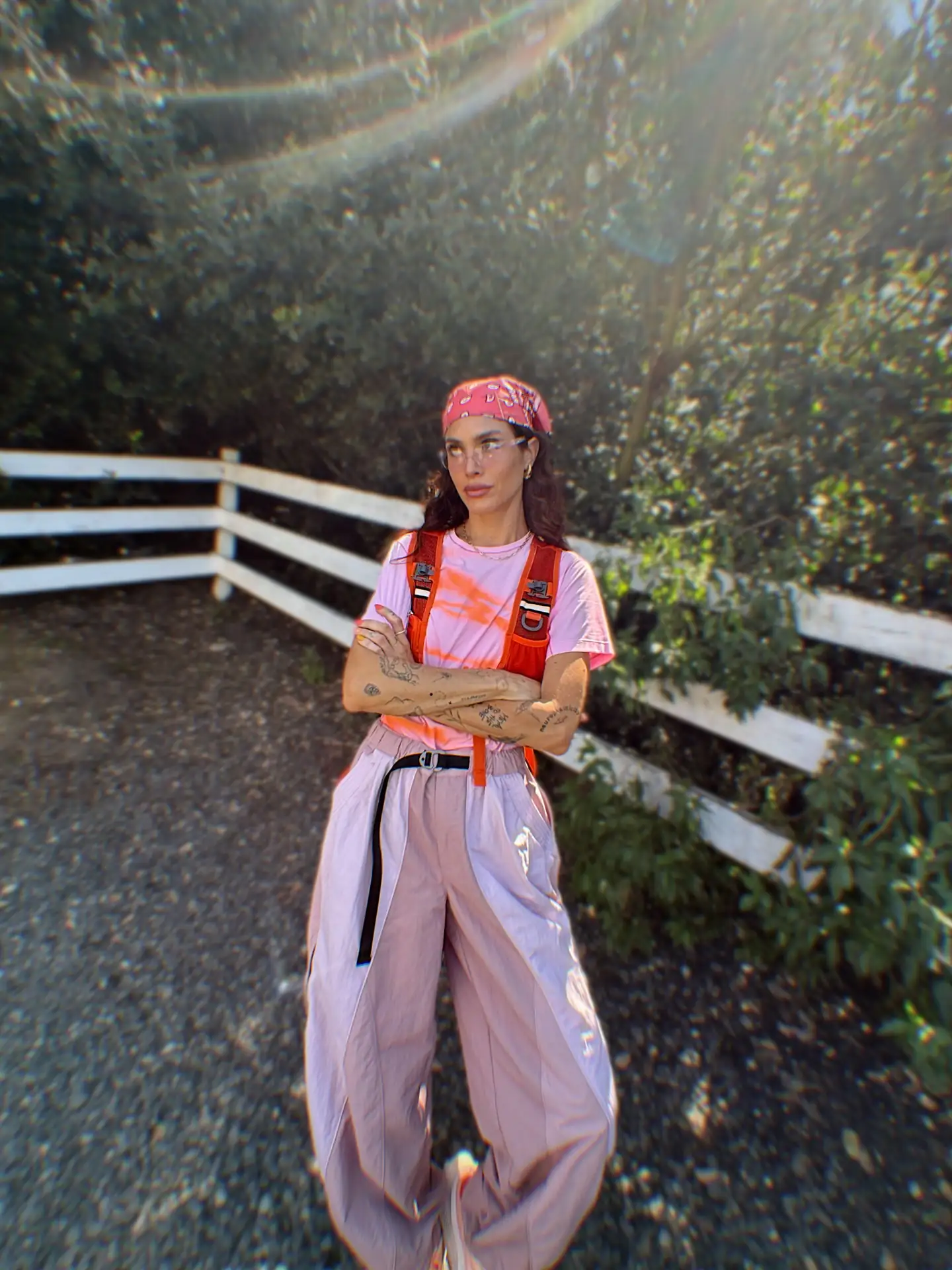
Lavender wide-leg trousers and a red utility harness create a sharp contrast between relaxed volume and structured support. The pastel base keeps the technical gear feeling approachable rather than purely utilitarian on the gravel path. A patterned bandana secures hair while adding a final pop of color.
Weight Spec: Look for ripstop nylon under 200 grams per square meter. Lighter fabrics prevent overheating during steep ascents while maintaining necessary tear resistance.
Durability Note: Reinforced stitching at the harness anchor points prevents strap failure under load. Abrasion-resistant panels on the trouser knees withstand constant contact with rough terrain.
Black Shell And Purple Fleece, Built For The Trail
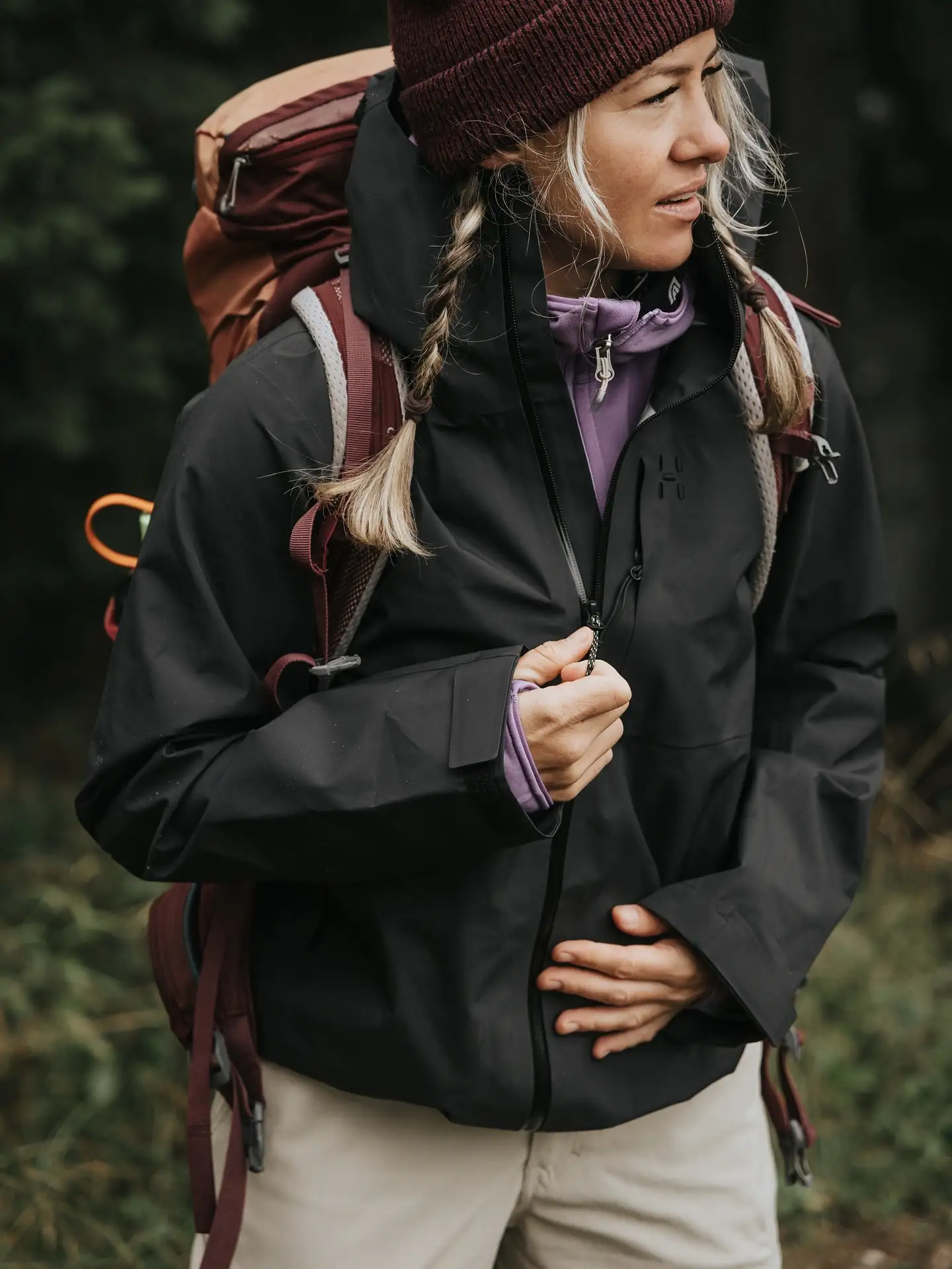
Your black hooded shell blocks wind while the purple fleece underneath traps warmth against your skin. Light beige trousers keep movement easy on steep climbs. A maroon beanie seals in heat when the forest air turns sharp. Every piece works together to keep you dry and focused.
Care Instructions: Wash shells in cold water on gentle cycle. Skip fabric softener to preserve waterproof coatings and breathability.
Layering Tip: Zip the fleece high before pulling the shell over it. This traps warm air without adding bulk under your backpack straps.
Hooded Shells Over Wide Trousers
Pairing a hooded shell with wide-leg trousers works because volume traps moving air while the top blocks wind. You saw this when the matte hooded shell anchored those wide olive snow pants against alpine gusts. The loose cut lets you climb without fabric pulling at your knees, while the hood seals out sudden weather shifts on exposed ridges.
Next time you pack for him or yourself, choose trousers with enough leg room to slide over base layers without compressing them. If your hooded shell restricts arm movement over that volume, size up the jacket, not down the pants.
Beige Trousers And White Tee, Light Against The Peaks
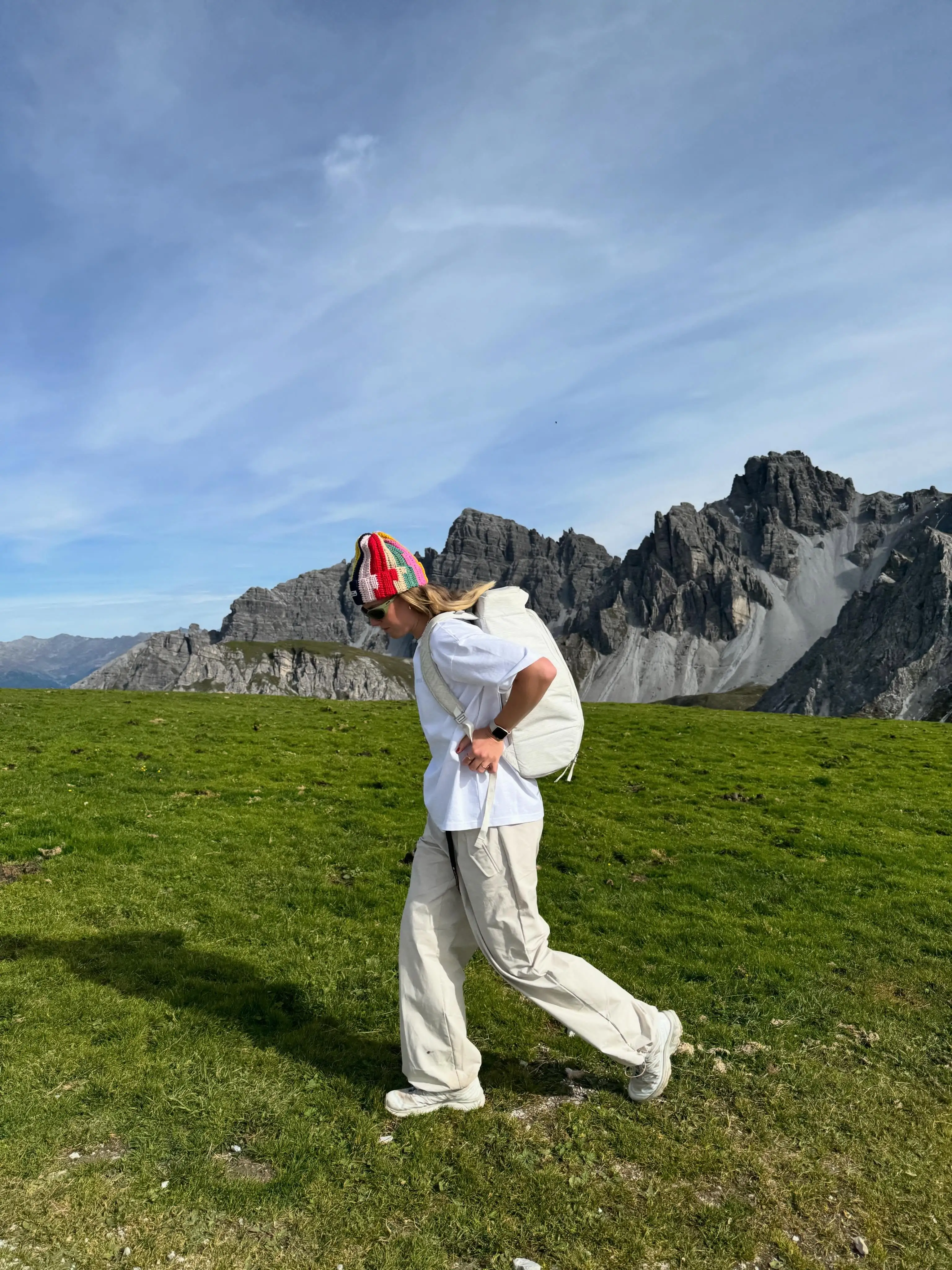
Loose white tee and wide beige trousers keep things light against the grey rock. Bright knit blocks add necessary contrast up high. Dark lenses and a smartwatch finish the practical setup for uneven ground.
Weather Rating: Best for mild alpine days with sun exposure. Keep a shell handy if those thin clouds thicken over the peaks.
Fabric Guide: Choose breathable cotton blends for the top to manage heat. Ensure trousers offer slight stretch for navigating the scattered stones easily.
Fit Advice: Wide legs allow airflow on steep climbs. Tuck the shirt in to stop backpack straps from riding up constantly.
Light Beige Hooded Jacket And Black Cargo Pants, Trail Ready
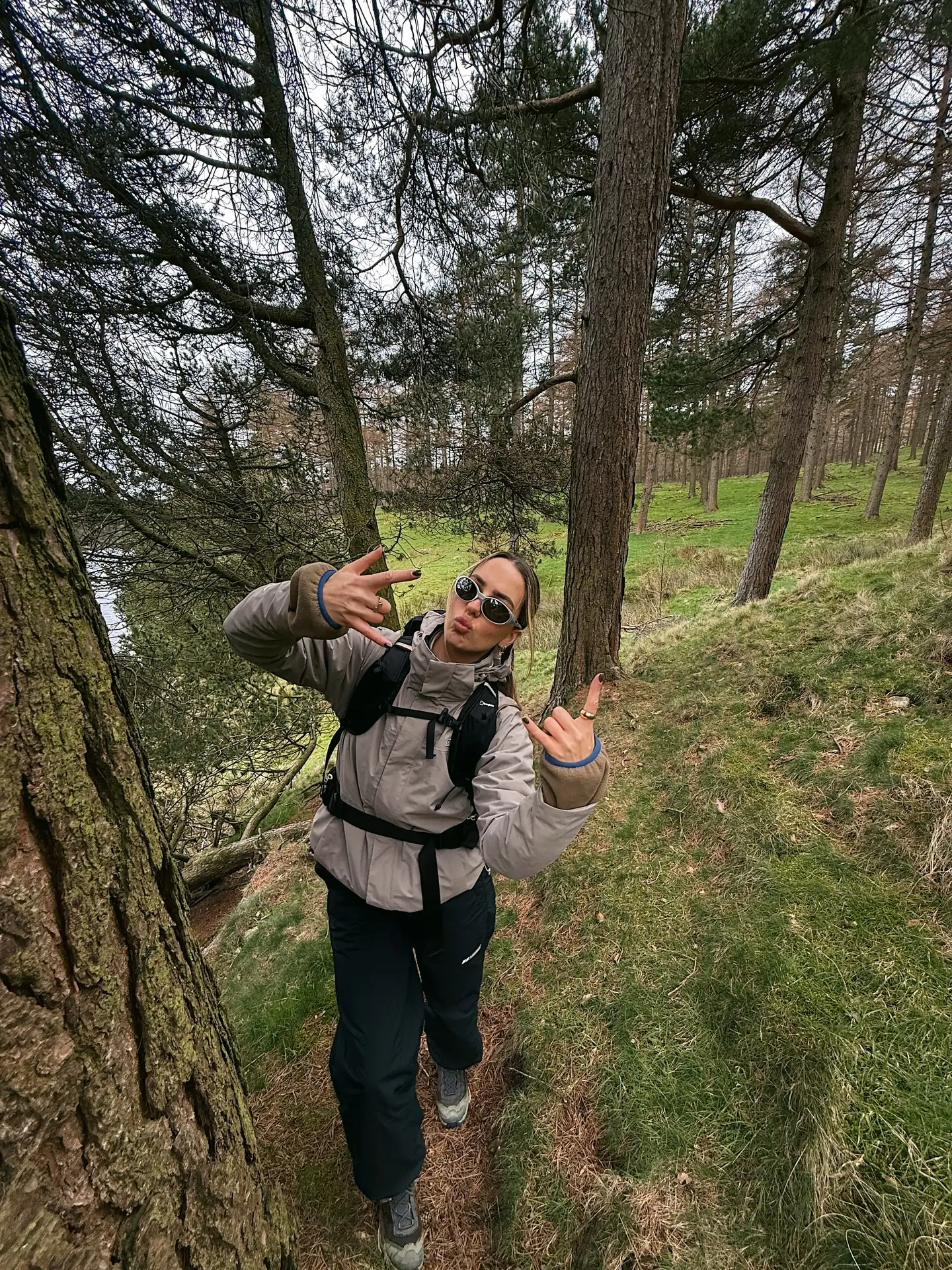
Light beige hooded jacket and black cargo pants create a sharp, functional base for uneven forest paths. The neutral tones blend with pine bark while the technical cut allows full range of motion. Silver sunglasses and a hydration pack finish the practical setup without sacrificing personal style on the ascent.
Weight Spec: Look for a shell under 400 grams to avoid fatigue during long climbs. Breathable fabrics prevent overheating when the trail steepens unexpectedly.
Durability Note: Reinforced knees on cargo pants resist abrasion from rough bark and rocks. Ripstop nylon in the jacket stops small snags from becoming major tears.
White Cargo Pants And Grey Windbreaker, Trail Ready Without The Bulk
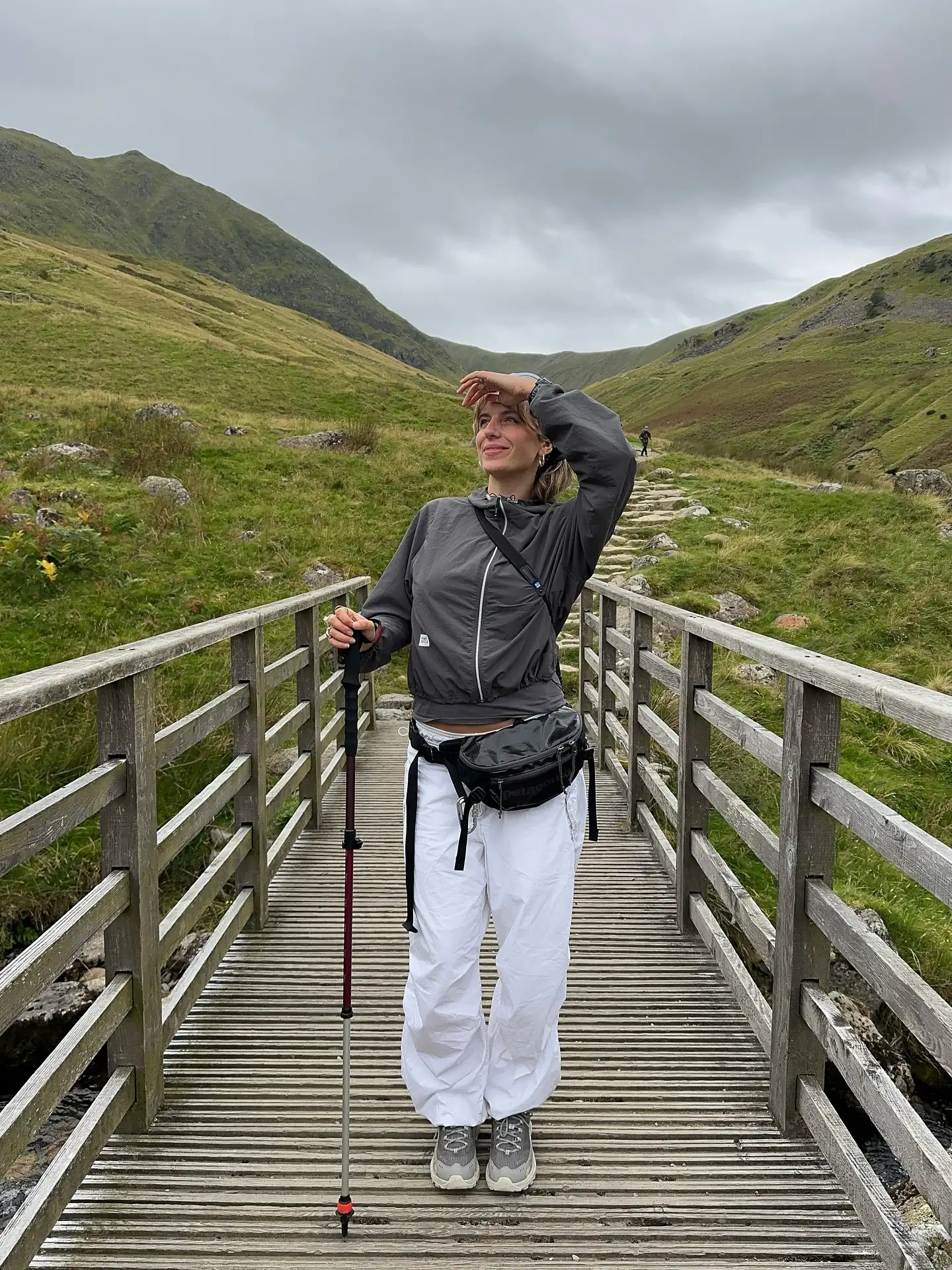
White cargo pants and a grey windbreaker create a sharp contrast against the green valley. The cropped jacket keeps your core protected while the loose trousers allow full range of motion on the stone path. A black fanny pack secures essentials without restricting your stride.
Weather Rating: Ideal for overcast days with cool breezes. The synthetic shell blocks wind while breathable fabric prevents overheating during steep ascents.
Layering Tip: Wear a moisture-wicking undershirt beneath the jacket. This setup manages sweat effectively when temperatures fluctuate between the bridge and higher elevations.
Olive Windbreaker And Wide Trousers, Built For The Mist
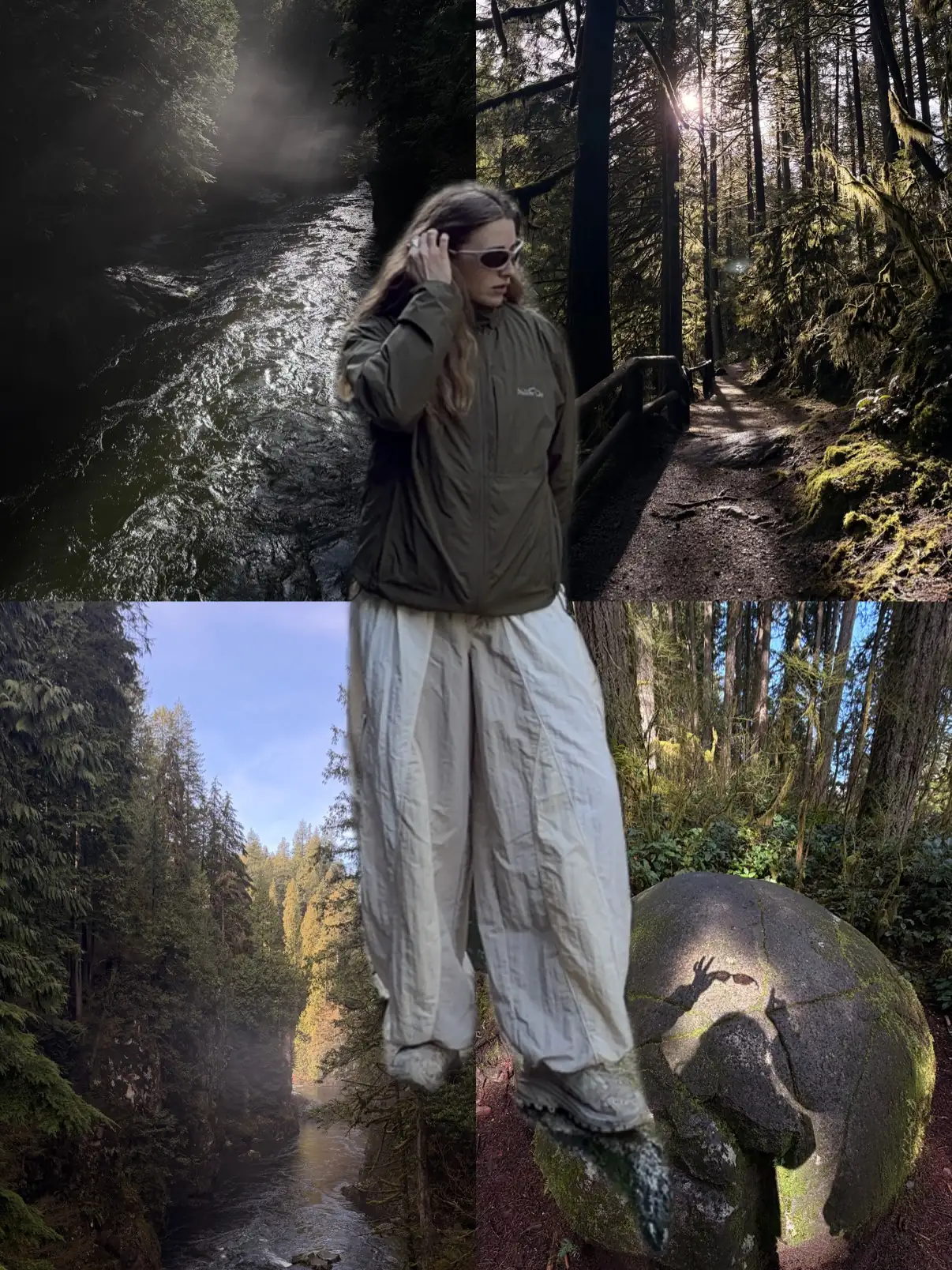
An olive zip-up windbreaker over loose beige trousers creates a grounded, capable look for shifting forest conditions. The lightweight shell blocks sudden mist while the wide cut allows full stride on uneven dirt paths. Dark lenses cut glare from sunlit canopy gaps.
Care Instructions: Machine wash cold on gentle cycle. Hang dry away from direct heat to preserve the water-repellent finish on the nylon shell.
Fit Advice: Choose a relaxed cut through the hip and thigh. The hem should pool slightly over chunky shoes without dragging on wet moss or rocks.
Lightweight Shells And Loose Trousers
Lightweight shells and loose trousers anchor every trail setup here. A grey windbreaker or olive zip-up paired with wide beige trousers works because the roomy cut lets you stride over scattered stones without binding, while the thin shell blocks sudden mist without trapping heat. You stay dry and mobile when the path steepens unexpectedly.
When packing for your trek, always choose trousers that pool slightly over chunky shoes but never drag on wet moss. That single fit check keeps mud off your hems and prevents snags on rough bark.
White Quarter-Zip And Black Shorts, Built For The Climb
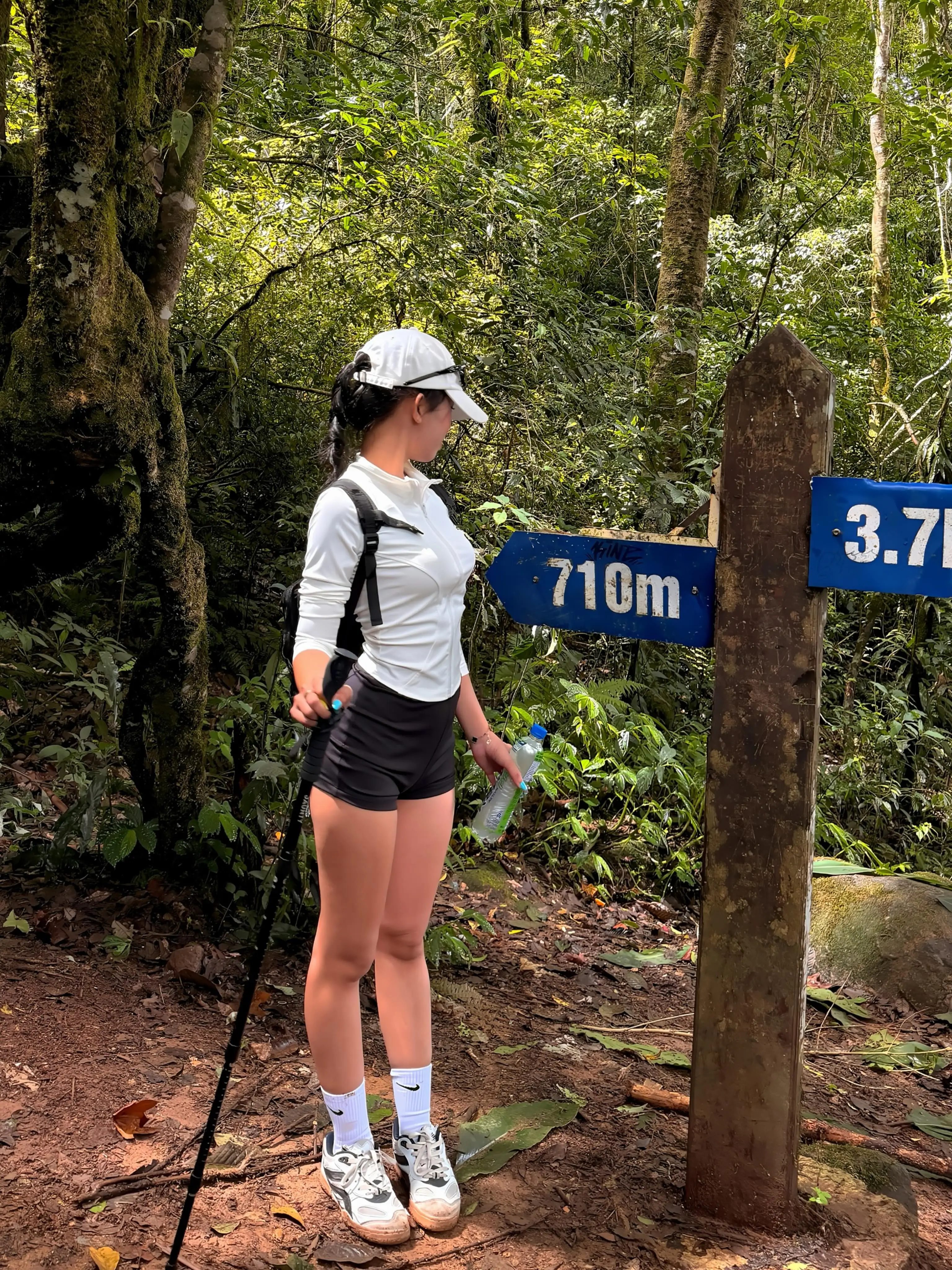
A white quarter-zip top and black shorts keep you light on humid forest trails. The breathable fabric moves with every step toward the 710m marker. White crew socks and sturdy sneakers handle the reddish dirt without slowing your pace down.
Durability Note: Reinforced shoe soles grip loose earth securely. Abrasion-resistant shorts withstand brush snags during steep ascents without tearing easily.
Fabric Guide: Synthetic blends pull sweat away from skin fast. Lightweight knits dry quickly after sudden humidity spikes in dense woodland areas.
All Black Base Layers, Built For The Wind
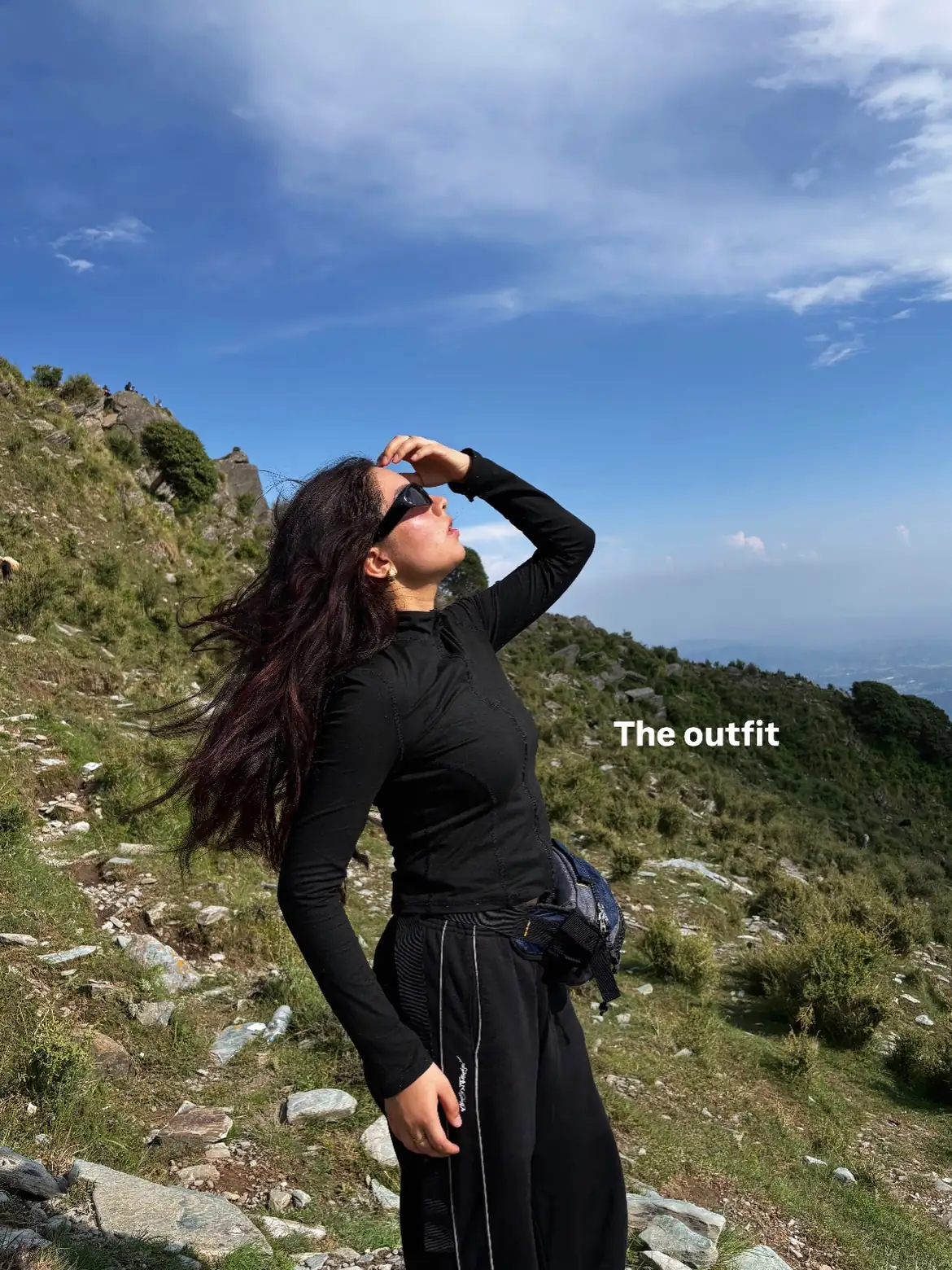
A fitted black long-sleeved top and loose trousers with white vertical stripes create a streamlined base for rocky slopes. The dark patterned fanny pack keeps essentials secure while strong wind blows through your hair. Black sunglasses shield your eyes from the bright glare above.
Layering Tip: Wear the fitted top as a moisture-wicking base under a shell. The loose trousers allow full range of motion on steep, uneven terrain.
Weather Rating: Ideal for bright, windy days on exposed ridges. The long sleeves protect against UV rays while the breathable fabric prevents overheating during climbs.
Wide Track Pants And Hydration Vest, Ready For Roots
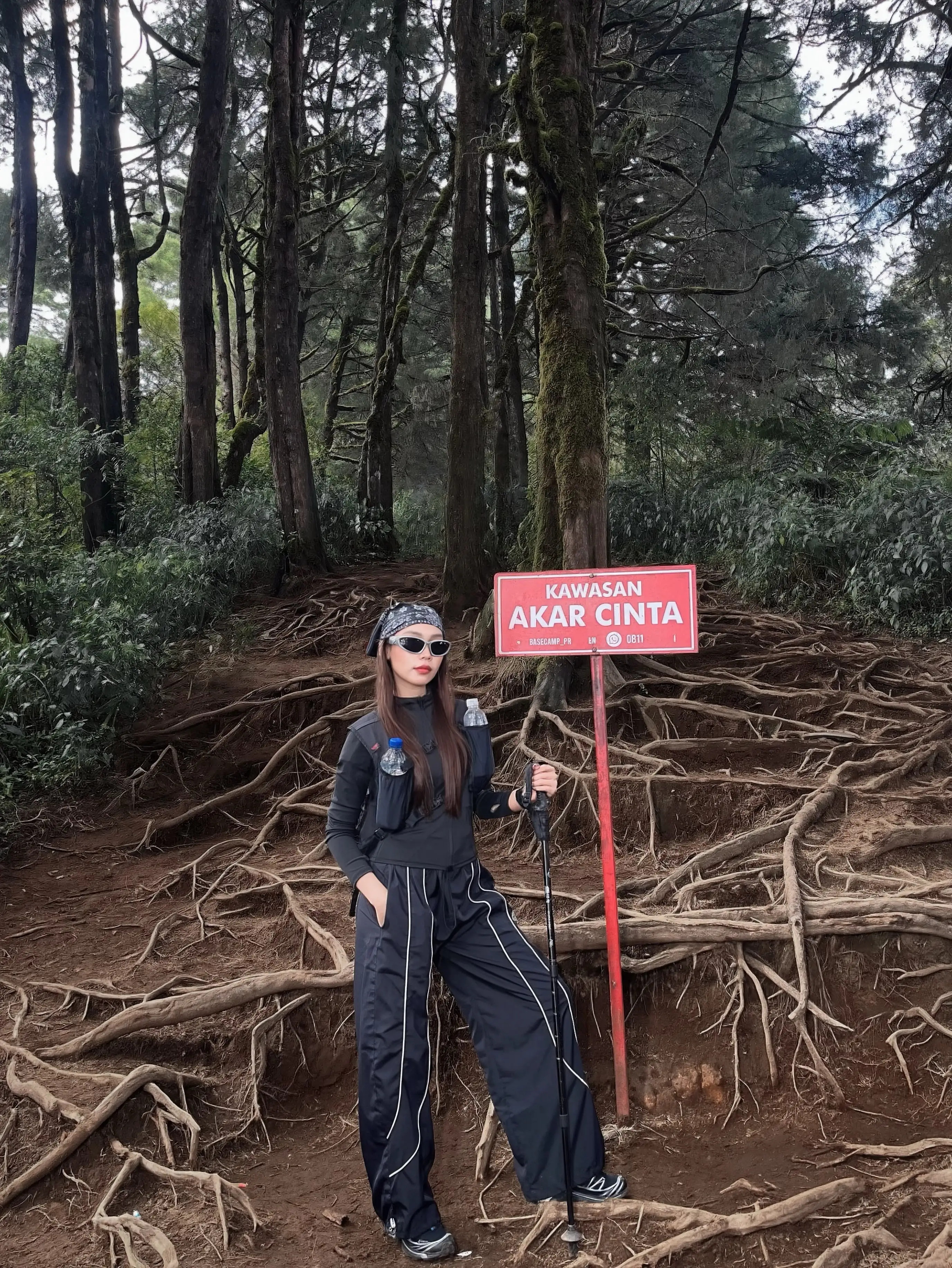
Black wide-leg track pants and a hydration vest create a functional base for uneven terrain. The loose cut allows freedom over exposed roots while the vest keeps water accessible without stopping. A patterned bandana manages sweat during steep climbs.
Weight Spec: Look for lightweight synthetic blends under 200 grams. Heavy fabrics slow you down on steep, root-covered inclines.
Fit Advice: Choose a relaxed fit through the hips and thighs. Tight cuts restrict movement when navigating complex, gnarled tree root systems.
Care Instructions: Machine wash cold with similar dark colors. Air dry completely to prevent mildew from forming in damp forest conditions.
Pink Windbreaker At The Waist, Slate Gray Doing The Work
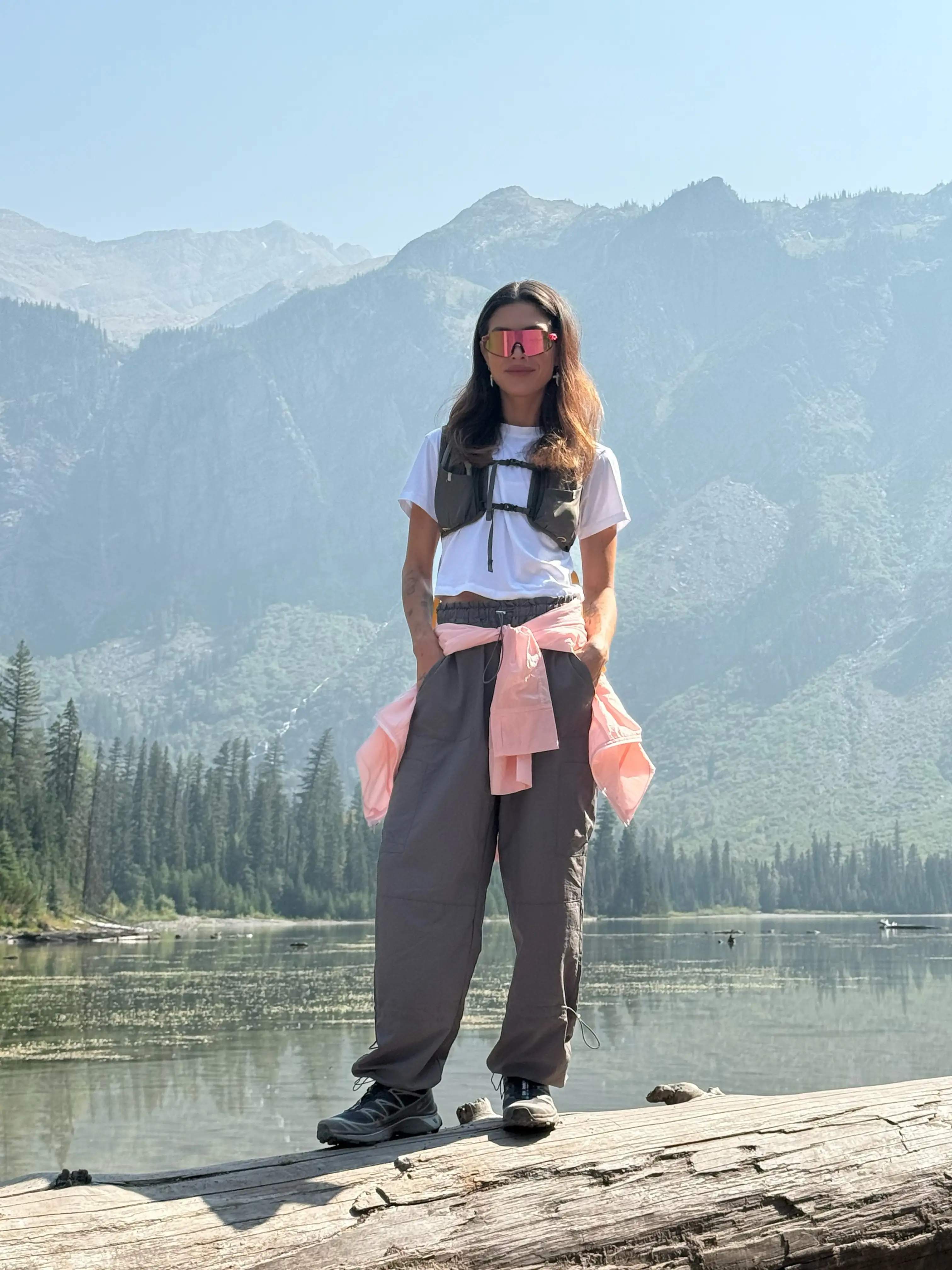
Slate gray cargos and a white cropped tee ground the look, while the pink windbreaker knotted at your waist adds necessary contrast. Black trail shoes handle uneven terrain without slowing you down. Mirrored lenses cut glare off the water, keeping your focus sharp on the path ahead.
Fabric Guide: Look for ripstop nylon in the jacket to resist snags. Choose moisture-wicking cotton blends for the base layer to manage sweat efficiently.
Durability Note: Reinforced knees on the cargo pants prevent wear from scrambling. Thick rubber soles on the shoes protect feet from sharp rocks.
Layering Tip: Tying the shell at your hips keeps it accessible for sudden weather shifts. This method also regulates core temperature without stopping to unpack gear.
Moisture-Wicking Fabrics And Trail Shoes
Moisture-wicking fabrics and trail shoes connect every outfit here. When you wear the white quarter-zip toward the 710m marker or lace up black trail shoes over exposed roots, these two elements keep you moving. The synthetic blends pull sweat off your skin before it chills you in the wind. The thick rubber soles grip loose earth so you never slide backward on steep inclines.
Next time you pack for a trek with him, check every garment label first. If it does not explicitly say moisture-wicking, leave it at home.
Brown Sweatpants And Black Tank, Ready For The Pines
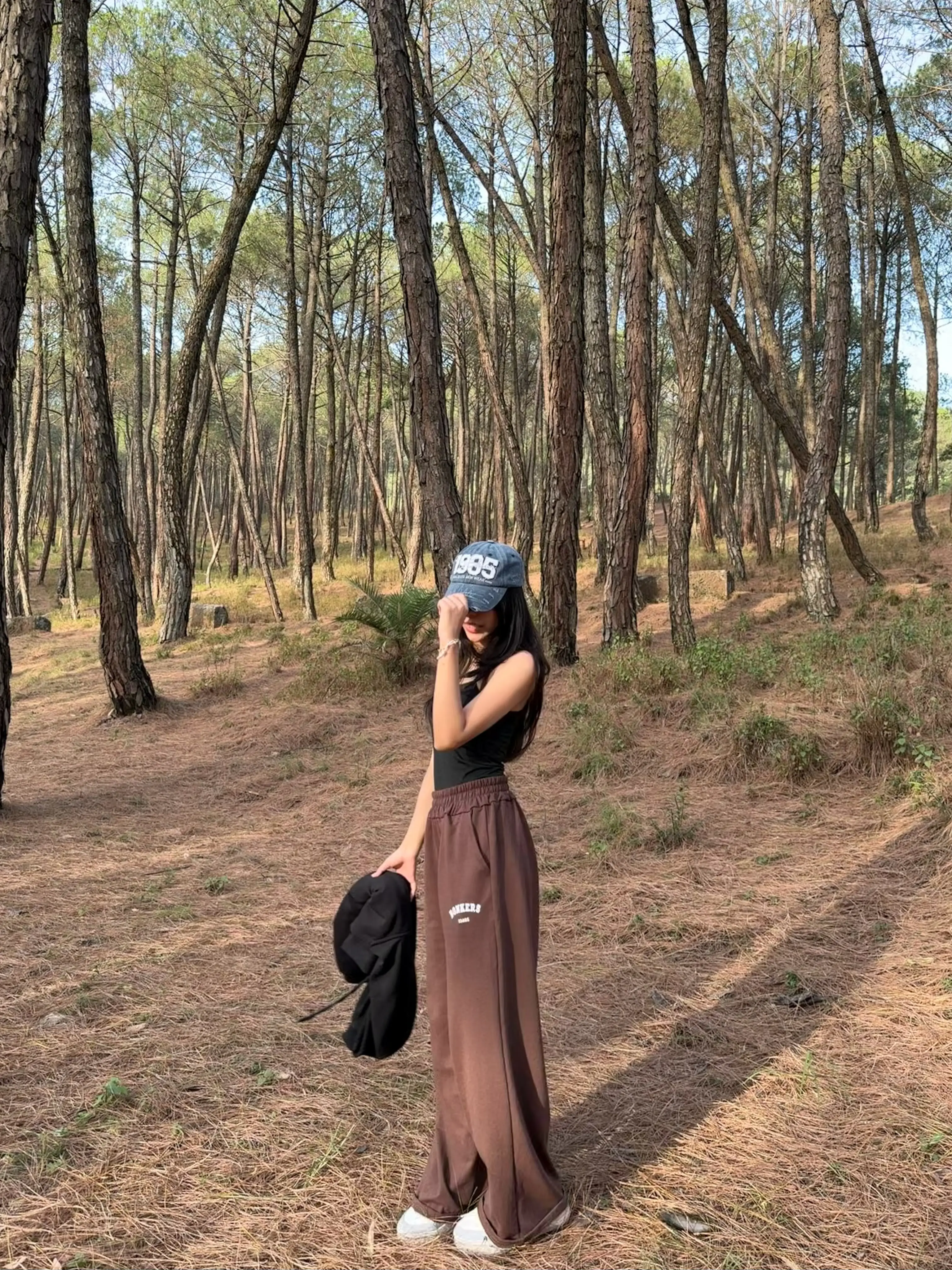
Brown sweatpants and a black tank create a grounded base for dry forest trails. The elastic waist allows full stride length without restriction on uneven terrain. A denim cap shields your eyes from midday sun filtering through the canopy.
Fit Advice: Choose an elastic waistband that sits securely without digging in during long ascents. Ensure the wide leg clears your footwear to prevent tripping on scattered pine needles.
Weight Spec: Select a lightweight cotton blend that breathes well in direct sunlight. Keep the total layer weight under one pound for easy packing when temperatures rise.
Red Headband And Grey Hoodie, Built For The Stream
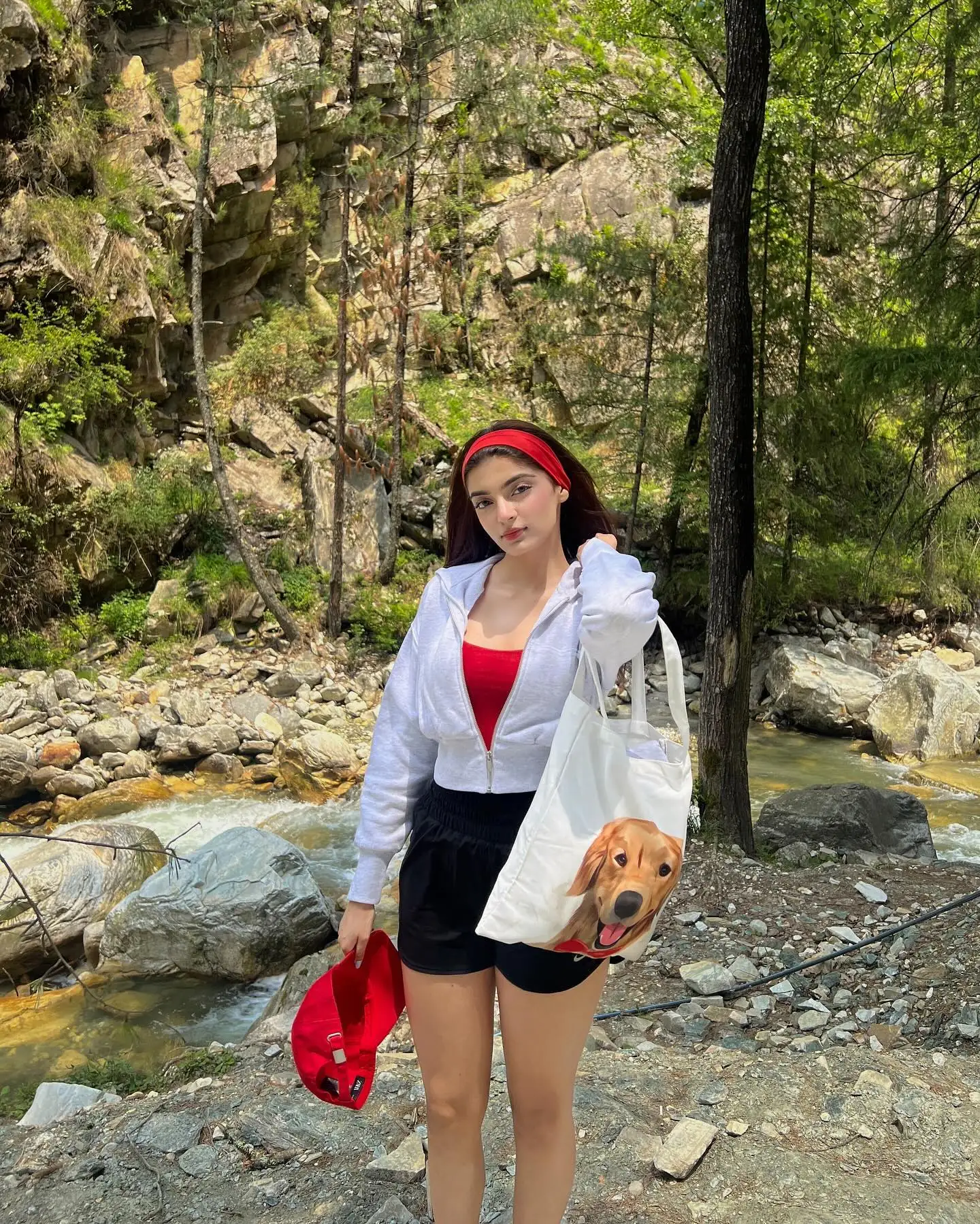
A light grey cropped hoodie over a red tank keeps your core warm while black athletic shorts allow full stride. The wide red headband secures hair against canyon winds. You hold a red cap ready for sudden sun exposure near the flowing water.
Weather Rating: Ideal for mild, dry days near moving water. The cropped layer traps heat without causing overheating during steep ascents on rocky terrain.
Care Instructions: Machine wash cold with similar colors to preserve the bright red dye. Air dry the canvas tote to prevent shrinkage and protect the printed graphic.
Olive Cargo Pants And Black Top, Ready For The Slopes
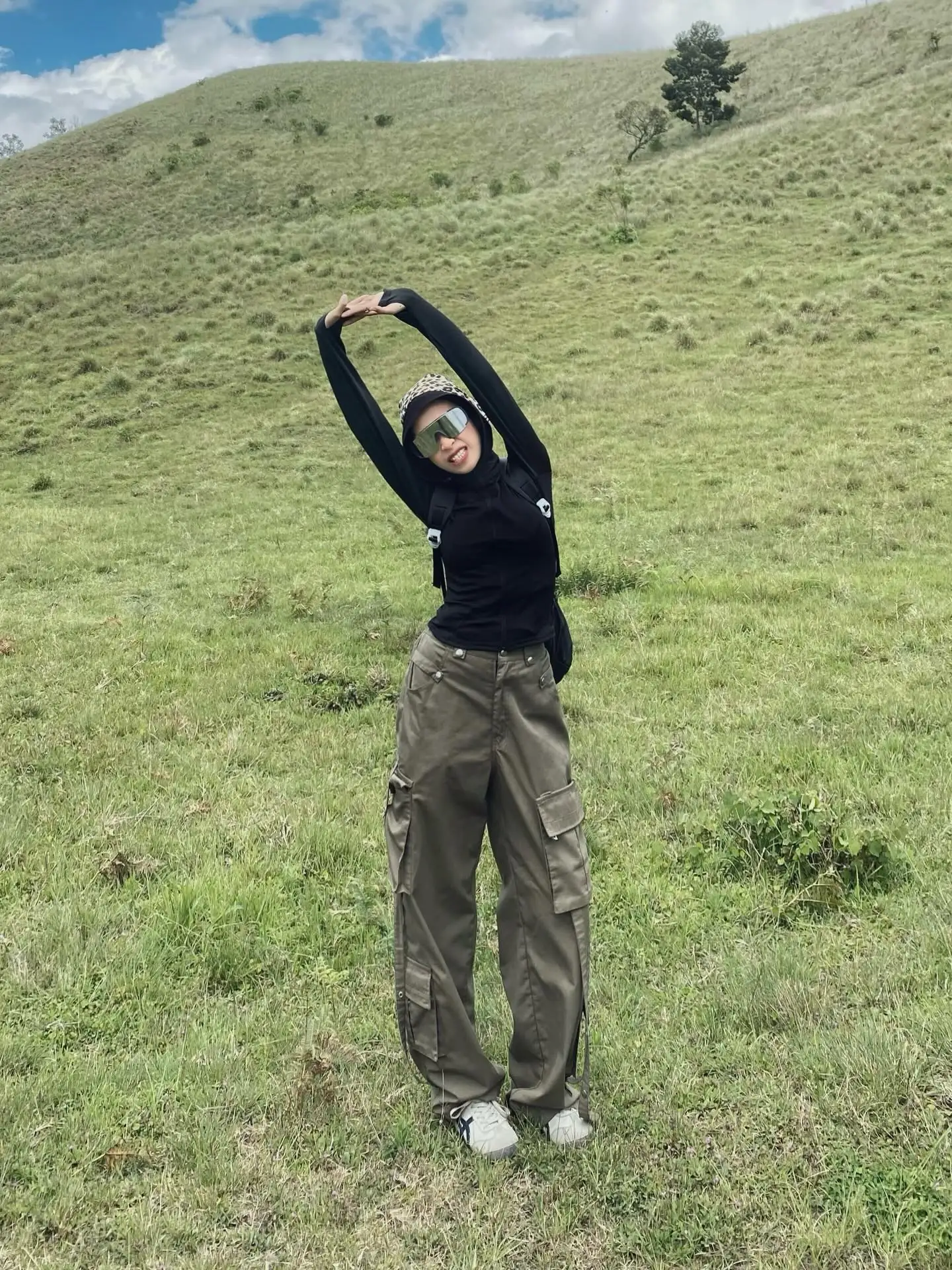
Olive cargo pants ground the black fitted top, creating a practical base for open terrain. Thumbholes keep sleeves secure while you stretch overhead on grassy hills. Mirrored lenses and a leopard head covering add personality without sacrificing sun protection during your ascent.
Layering Tip: Wear a fitted base under loose cargos to balance volume. Thumbholes prevent sleeve ride-up when reaching for gear or stretching on steep inclines.
Durability Note: Reinforced pocket flaps resist snags from brush. Choose ripstop fabric for cargo pants to withstand abrasion against rocks and rough trail surfaces.
Fabric Guide: Moisture-wicking synthetics dry fast after sweat. Avoid cotton blends that stay damp; prioritize breathable weaves that regulate temperature during variable mountain weather.
Navy Star Tee And Wide Track Pants, Built For Altitude
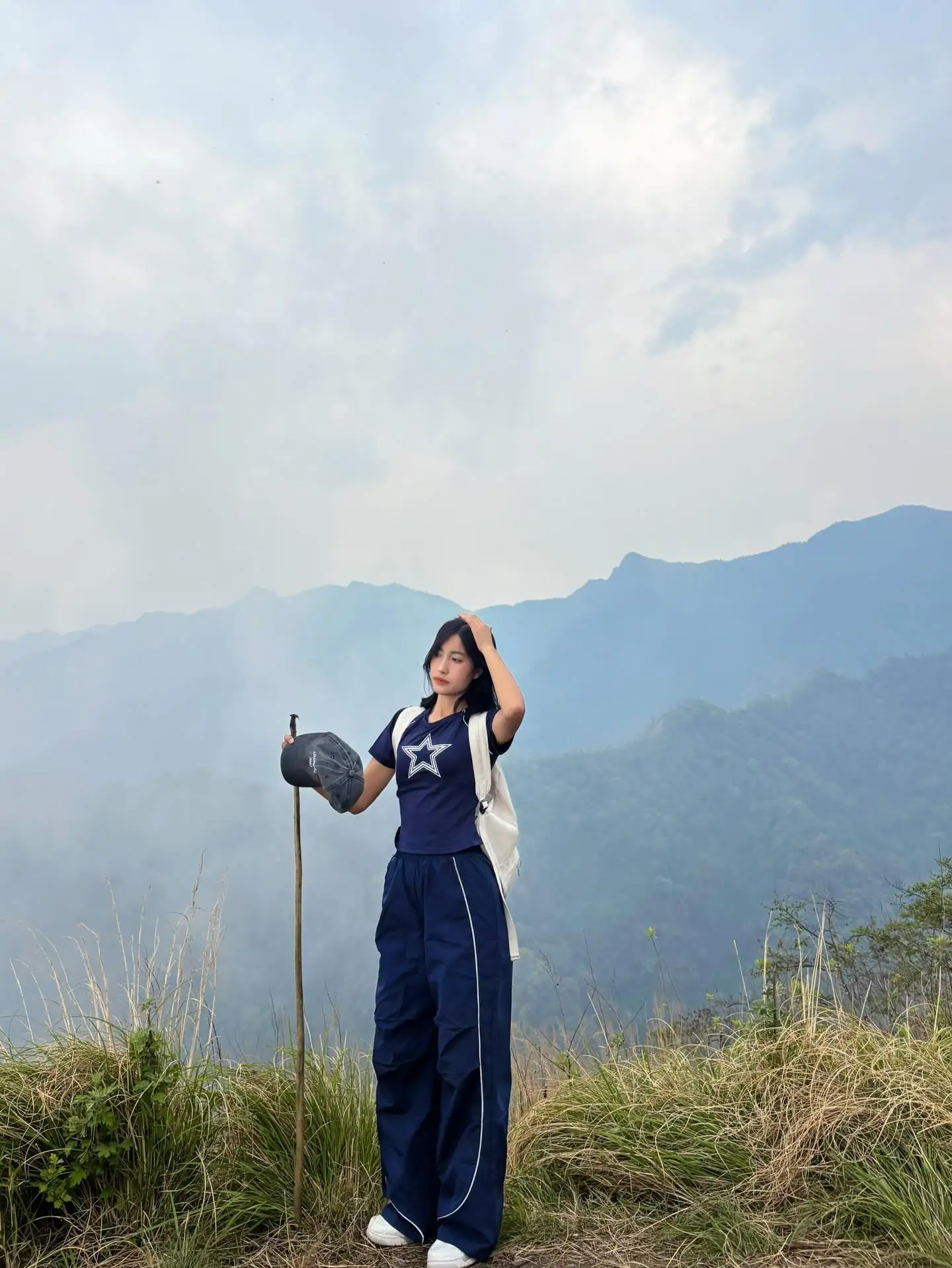
Navy star tee and wide track pants create a grounded, mobile base for high ridges. The lightweight synthetic blend breathes through elevation changes while the loose cut prevents restriction on steep ascents. White sneakers and a simple backpack keep the focus on steady footing and clear views.
Weather Rating: Handles mild to cool ridge conditions well. The breathable fabric manages moisture during steady climbs under overcast skies without trapping excess heat.
Weight Spec: Ultralight construction reduces pack burden significantly. Every gram saved on clothing translates to less fatigue during long elevation gains on uneven terrain.
Fit Advice: Choose a relaxed waistband that sits comfortably at your natural line. Ensure the leg width allows full stride extension without catching on rocks or brush.
Moisture-Wicking Tanks And Elastic Waist Bottoms
A moisture-wicking tank top paired with elastic waist bottoms forms the core of your trail layering system. Whether you wear a black tank under dry pines or pair that light grey cropped hoodie near a flowing stream, this combination works because it moves sweat away from your skin while letting your hips flex freely on uneven ground.
When you pack for your next trek, choose an elastic waistband that sits flat against your stomach without rolling down during steep climbs. If it pinches when you sit, swap it out before you leave.
Olive Windbreaker And Black Shorts, Calm In The Mist
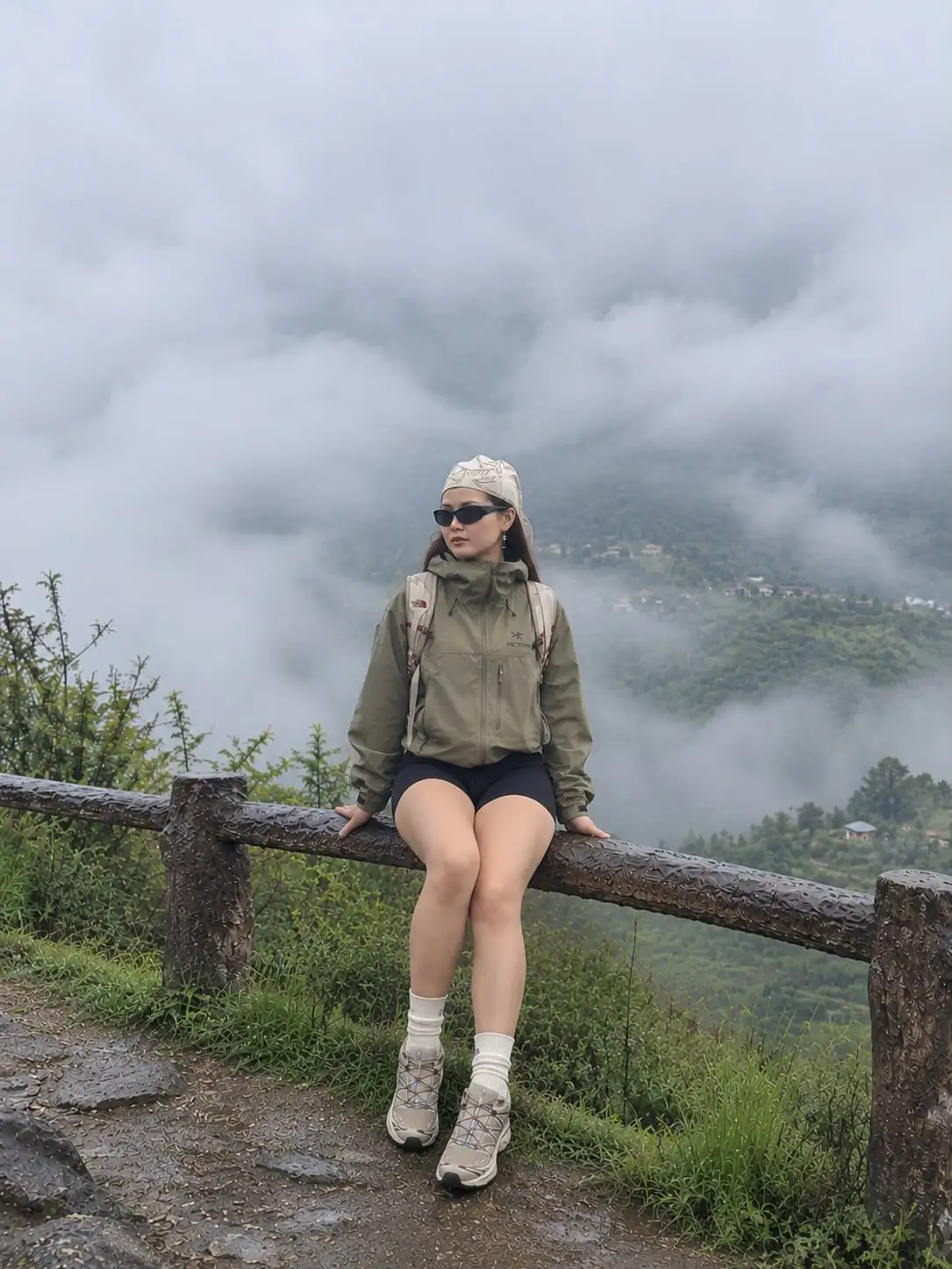
Olive windbreaker and black shorts create a grounded contrast against the grey fog. The hooded shell blocks damp air while exposed legs keep you cool during steep climbs. Beige bandana and white socks add practical texture to this misty mountain pause.
Layering Tip: Wear a moisture-wicking base under the windbreaker. Add a light fleece if temperatures drop near the cloud line.
Care Instructions: Rinse mud off hiking shoes immediately. Air dry the jacket away from direct heat to preserve waterproof coatings.
Durability Note: Reinforced stitching on the backpack straps handles heavy loads. Rubber toe caps on shoes protect against sharp rocks on wet trails.
Black Vest And Olive Pants, Balanced For The Canyon
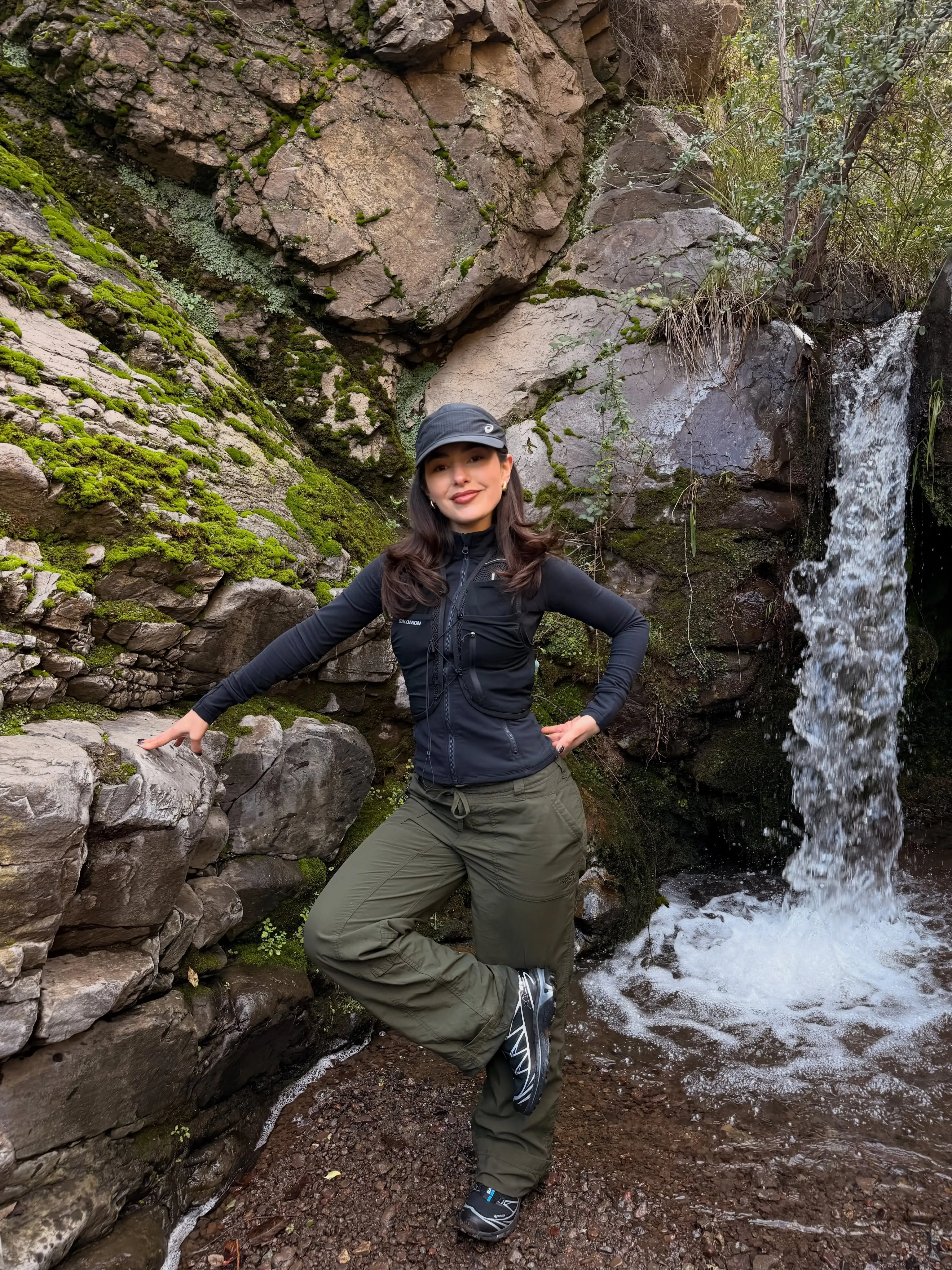
A black zippered vest over a long-sleeved base layer creates reliable core warmth without restricting arm movement. Olive cargo pants offer durable coverage near wet rocks and flowing water. Aggressive lug soles on trail shoes secure your footing on slippery canyon stones, keeping you steady beside the cascade.
Weight Spec: Keep the vest under eight ounces for easy packing. Base layers should weigh less than five ounces to prevent overheating during steep climbs.
Fabric Guide: Choose nylon blends for the vest to resist abrasion from rough stone. Ensure pants contain spandex for full range of motion near waterfalls.
Weather Rating: This layering suits mild temperatures between fifty and seventy degrees. Add a waterproof shell if the waterfall spray increases or clouds gather overhead.
Black Zip Jacket And Iridescent Shades, Built For Snow
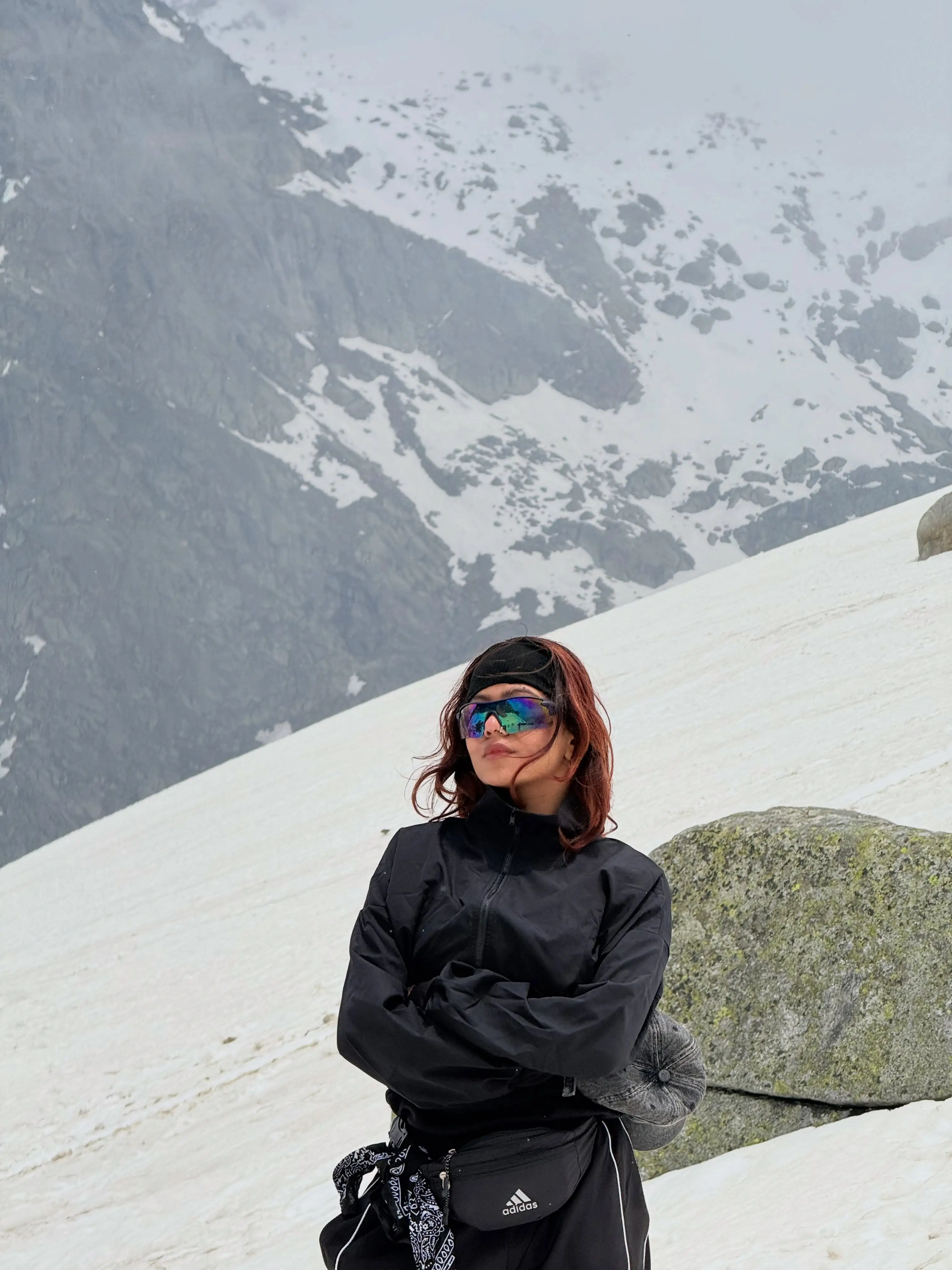
A synthetic zip jacket and reflective sunglasses create a shield against alpine glare. Dark fabrics absorb heat while the mirrored lenses protect your eyes from snow blindness. Tucking a bandana into your waist bag keeps essentials accessible without slowing your pace on steep slopes.
Care Instructions: Rinse synthetic shells in cold water after snowy treks to remove salt and grit. Air dry completely before storing to prevent mildew growth in damp fabric fibers.
Fit Advice: Choose a jacket with enough room for a mid-layer underneath without restricting arm movement. Ensure the waist bag sits securely above your hips to avoid bouncing.
Layering Tip: Wear a moisture-wicking headband under your hood to manage sweat during steep ascents. Add insulated gloves when temperatures drop below freezing on exposed ridges.
Beige Cargo Pants And White Cap, Ready For The Climb
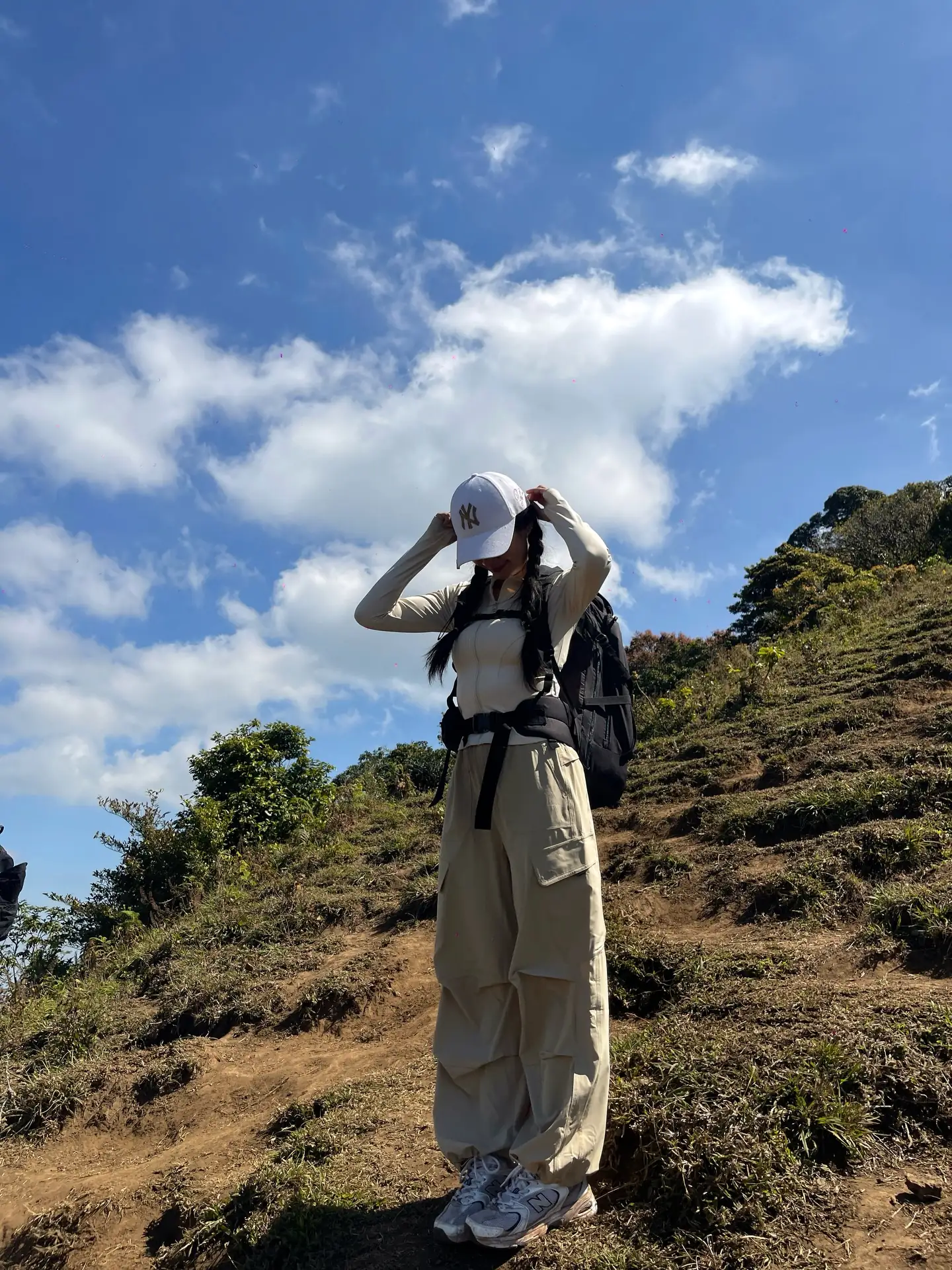
Light beige long-sleeve top and matching wide-leg cargo pants create a unified, sun-reflecting base for steep dirt paths. The neutral tones minimize heat absorption while the loose fit allows unrestricted movement over uneven terrain. A white baseball cap shields your eyes as you adjust gear mid-ascent.
Fabric Guide: Seek synthetic blends with four-way stretch for active mobility. Prioritize UPF 50+ ratings in light colors to block harsh alpine紫外线 effectively.
Durability Note: Reinforced knee panels prevent tears on rocky scrambles. Check double-stitched pocket flaps to ensure heavy gear stays secure during long descents.
Beige Hooded Shell And Olive Pants, Grounded For The Trail
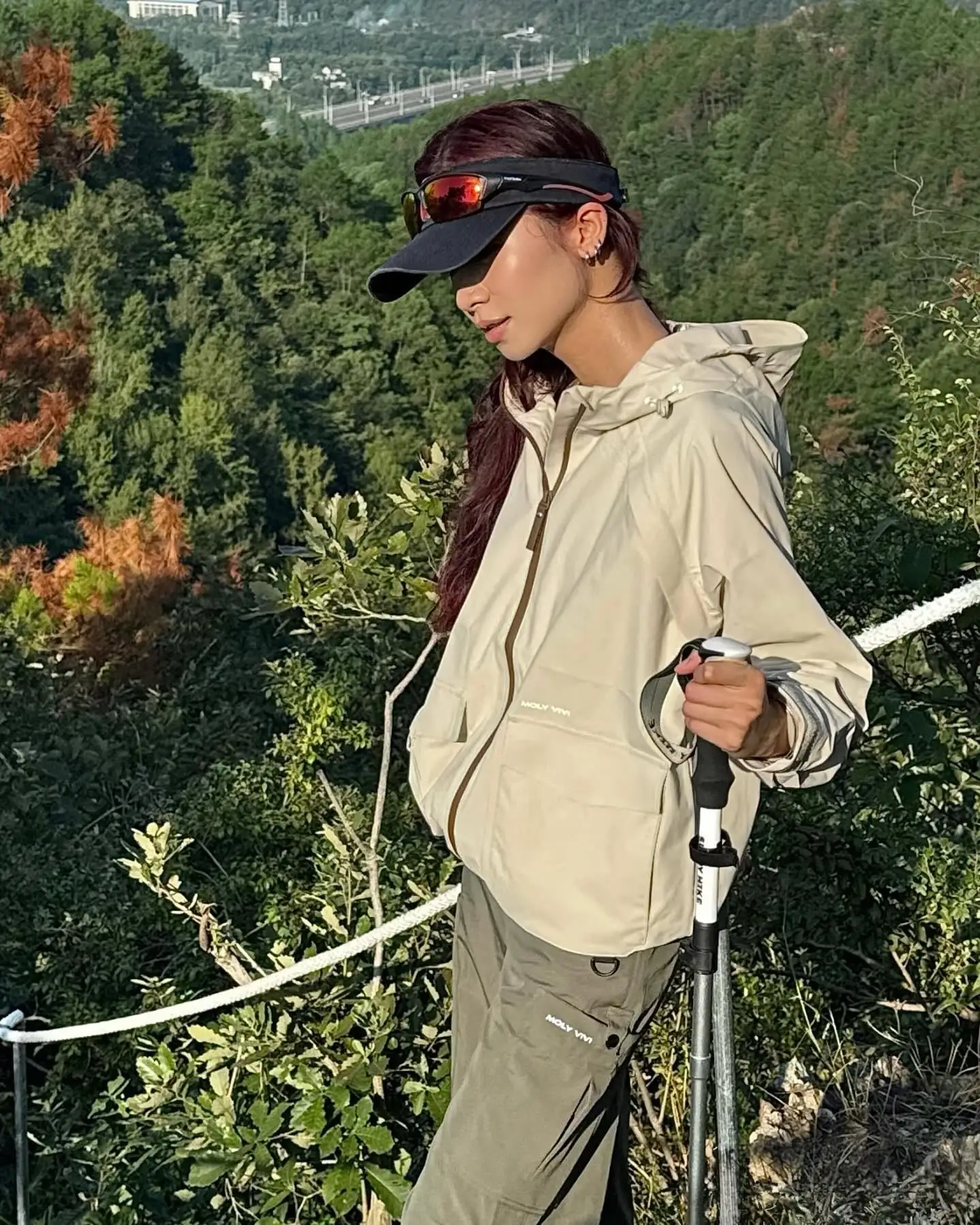
A beige hooded windbreaker over olive cargo pants creates a grounded, functional base for changing elevations. The neutral tones blend with the forest while the technical fabrics manage moisture and wind. Resting reflective sunglasses on the visor keeps your vision clear without sacrificing quick access to eye protection.
Weight Spec: Look for ultralight ripstop nylon under 200 grams. This minimizes pack weight while maintaining durability against abrasive trail brush and sudden gusts.
Weather Rating: Choose water-resistant coatings rated for light drizzle. Breathable membranes prevent overheating during steep ascents while blocking unexpected mountain showers effectively.
Care Instructions: Machine wash cold on gentle cycle without fabric softener. Air dry completely to preserve the durable water repellent finish and zipper functionality.
Which Trekking Outfit Pieces Will Keep You Comfortable on the Trail?
Every single one of these 37 trekking clothing items and gear essentials shares a common thread: they are designed to adapt to unpredictable weather while delivering a precise, comfortable fit for women on the move. From moisture-wicking base layers that keep you dry during steep ascents to durable outer shells that block sudden downpours, each piece prioritizes function and longevity so your comfort never depends on luck.
With such a comprehensive lineup covering everything from insulated mid-layers to supportive footwear and protective accessories, building your ideal trail wardrobe becomes an exciting process rather than a chore. As you map out your next multi-day trek, consider which of these entries would make the biggest difference in your pack—and which one you would reach for first when the morning air turns crisp.
Frequently Asked Questions
What materials should I look for in a women’s trekking outfit to handle changing weather?
Focus on moisture-wicking synthetics, merino wool base layers, and breathable waterproof shells that regulate your temperature across different elevations. Avoid cotton entirely, as it traps sweat and dries slowly, which can lead to rapid heat loss on the trail. Layering technical fabrics ensures you stay dry and comfortable whether you face morning mist or afternoon sun.
How should trekking trousers fit for a multi-day hike?
Trekking trousers, such as olive cargo pants or wide-leg technical styles, should offer a relaxed fit through the hips and thighs to allow full range of motion during steep ascents. Look for articulated knees and adjustable waistbands or drawcords to prevent chafing under a heavy pack. The fabric needs enough stretch and durability to withstand brush, rocks, and repetitive movement over consecutive days.
Are brightly colored jackets practical for hiking, or just aesthetic?
Brightly colored outerwear, like a light pink zip-up or a purple shell, serves a critical safety function by making you highly visible to other hikers and rescue teams in low-visibility conditions. Beyond safety, modern technical jackets in vivid hues use the same durable, wind-resistant, and water-repellent materials as neutral options. Choosing a standout color simply means you do not have to sacrifice performance for visibility on exposed ridges or snowy trails.
